Cumberland Island has been on the list of places I wanted to visit. It is a large, mostly protected, barrier island once owned by the Carnegie family. It is only accessible by boat and there is a ferry from St. Mary’s. There are several anchorages off the island with dinghy access. We motored there in the morning and anchored at Cumberland South. We only had a few hours to explore so I chose to see the Dungeness ruins, and the beach.
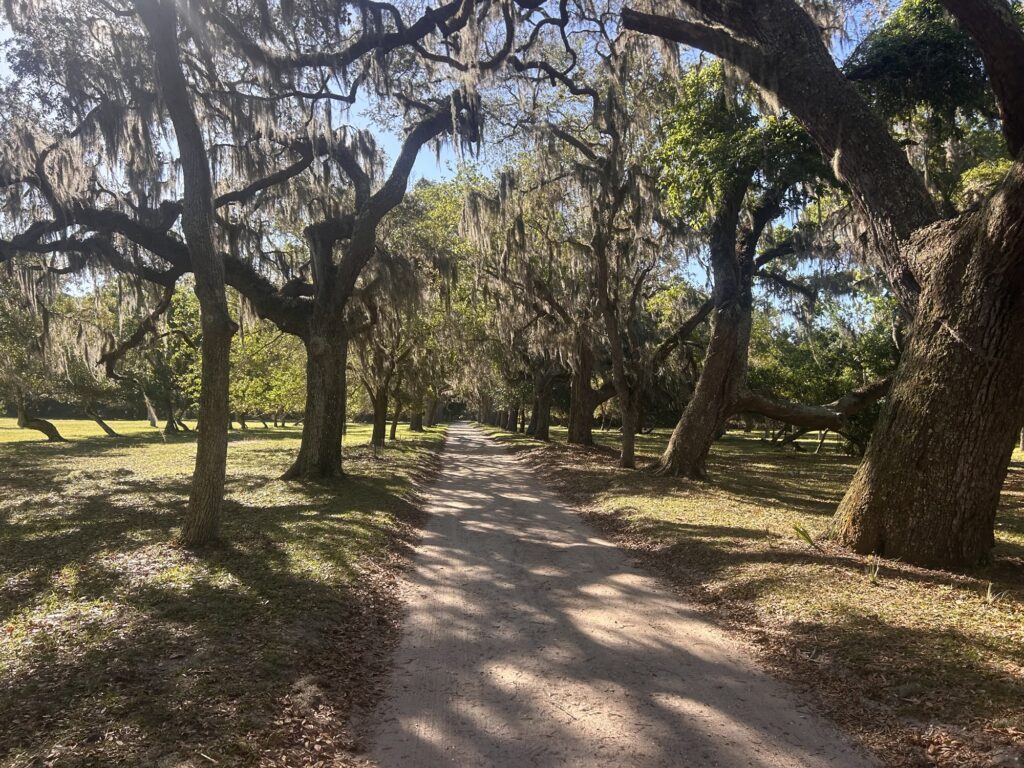
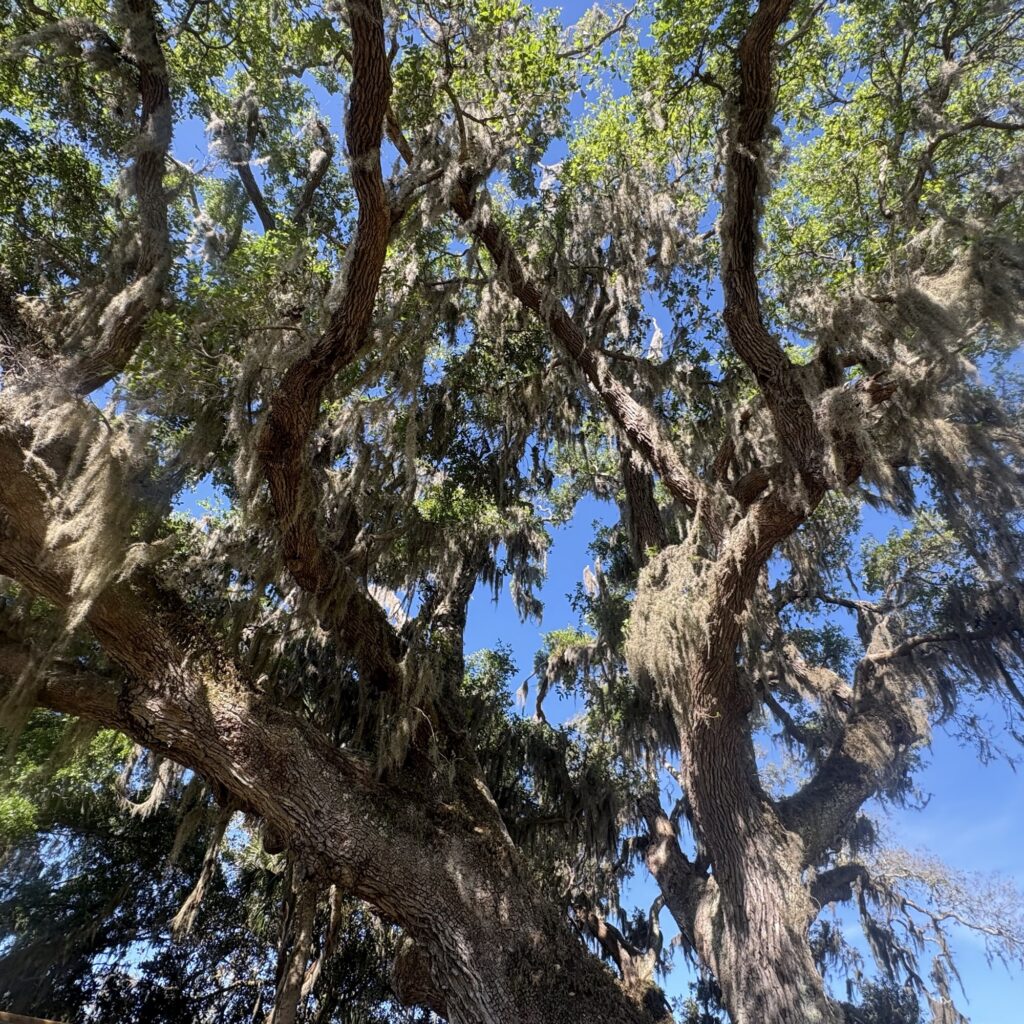
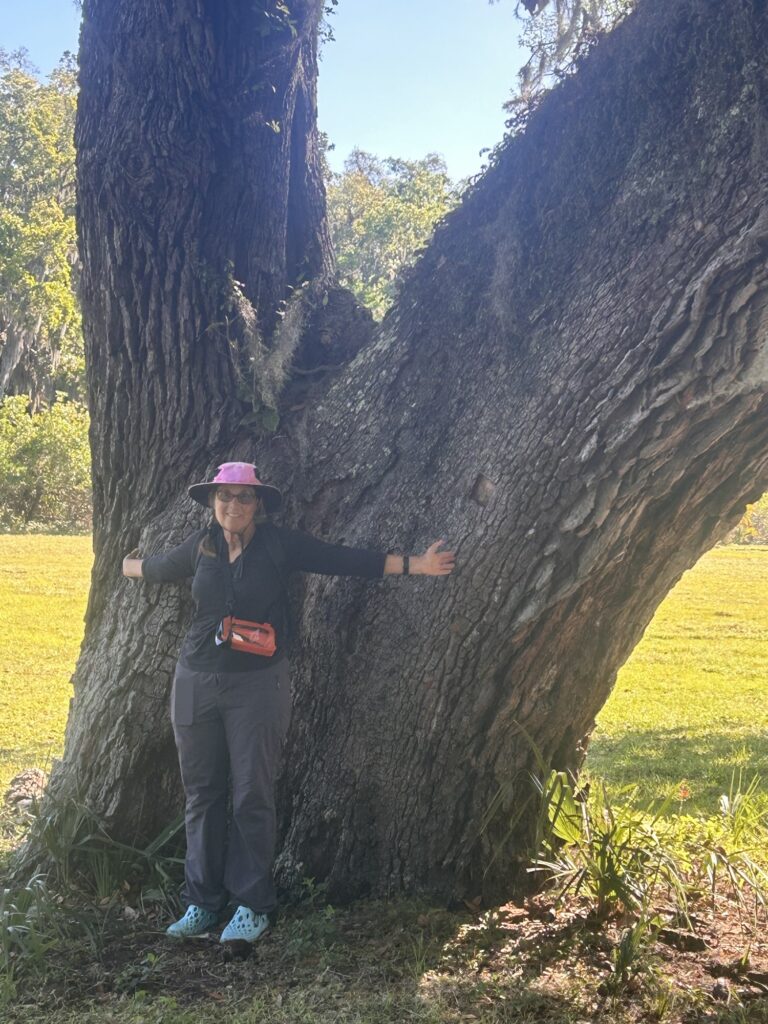
It was easy to anchor and we launched Fat Tuesday for a trip ashore. There were maps at the dinghy dock. We got there before the first ferry arrived and started walking down a live oak canopied lane. It was quiet except for birds.
The lane passed an old gate which opened onto a vast green field overlooking the marsh. The ruins of the mansion were there. Wild horses were quietly grazing in the grass and an osprey was nesting atop one of the chimneys.
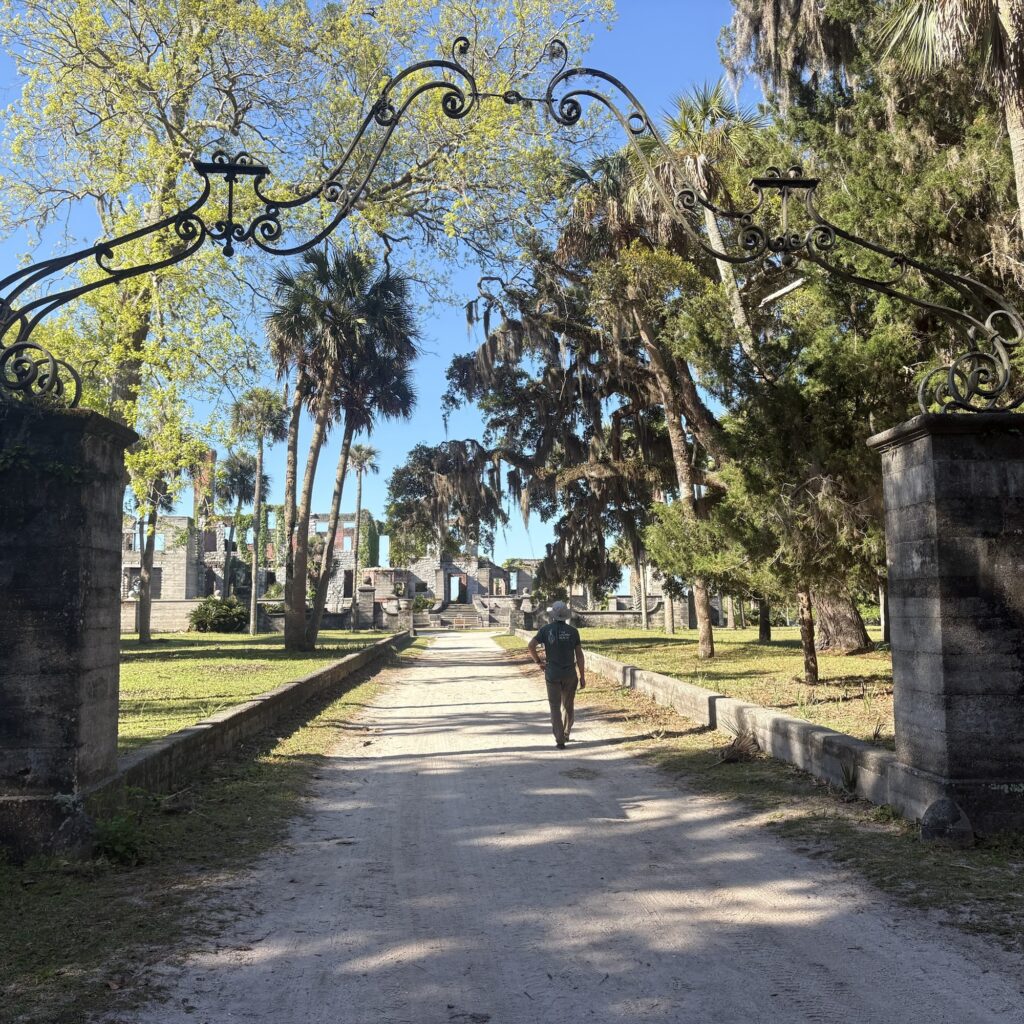
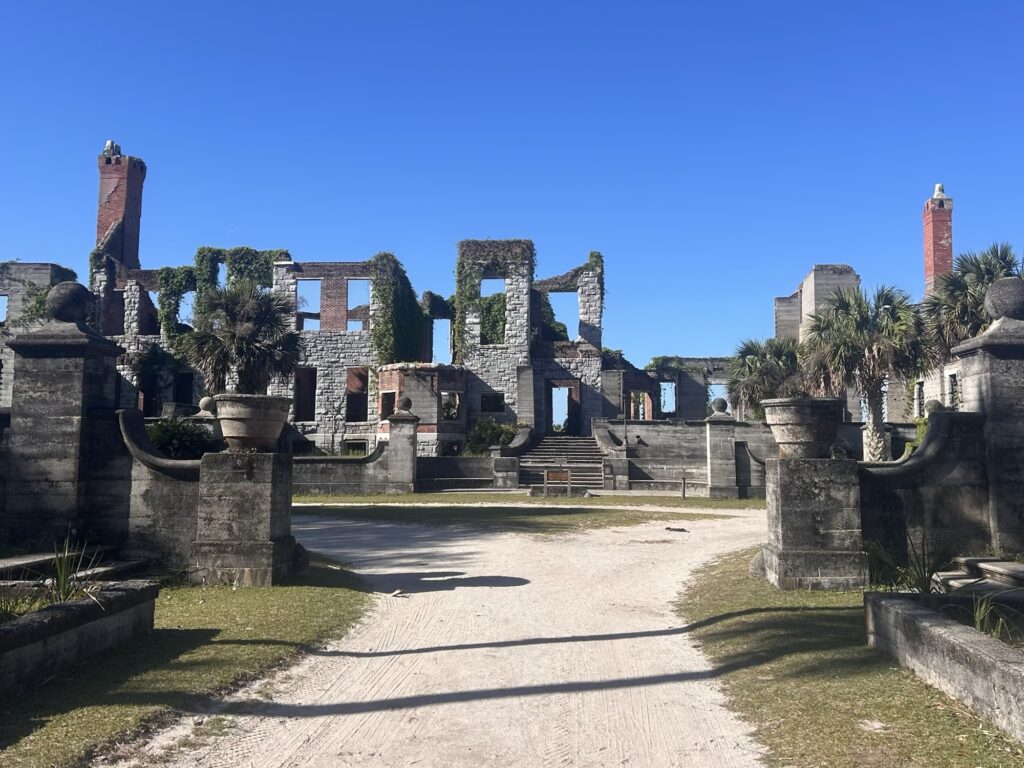
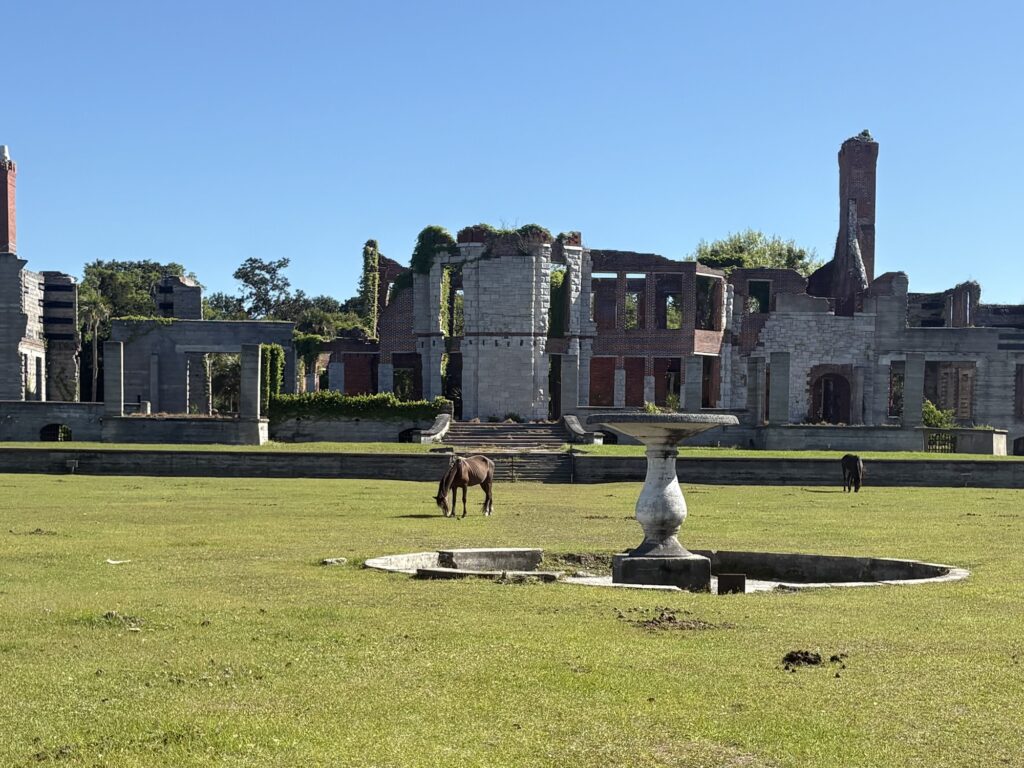
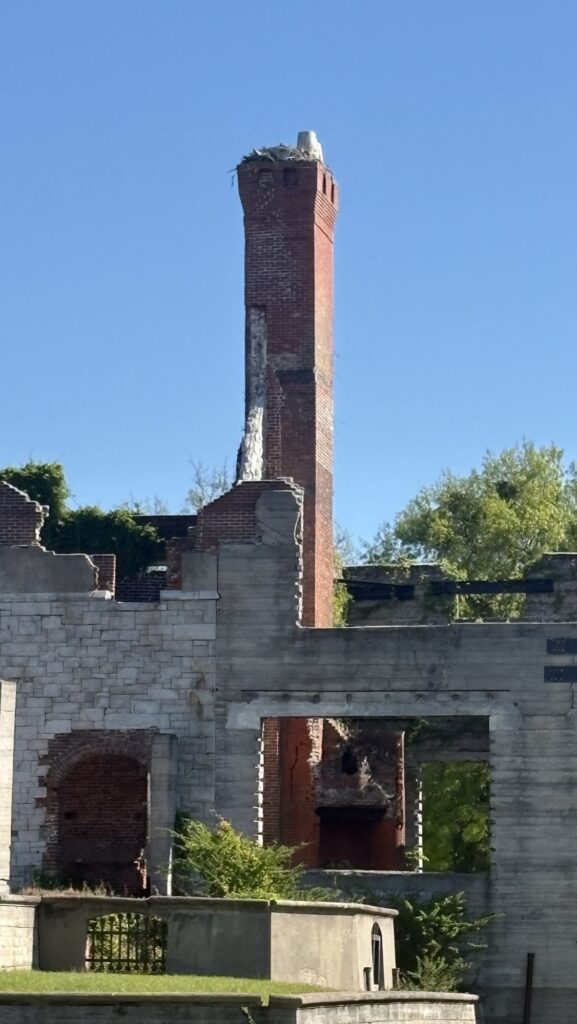
The original Dungeness was built by Nathaniel and Catherine Greene. Nathaniel was a revolutionary war hero and built a cottage on the island after the war. That cottage , made of Tabby, still stands. They later built the first Dungeness in 1783-1786. It was a four story tabby home later destroyed by fire. The second Dungeness one was built on its foundation.
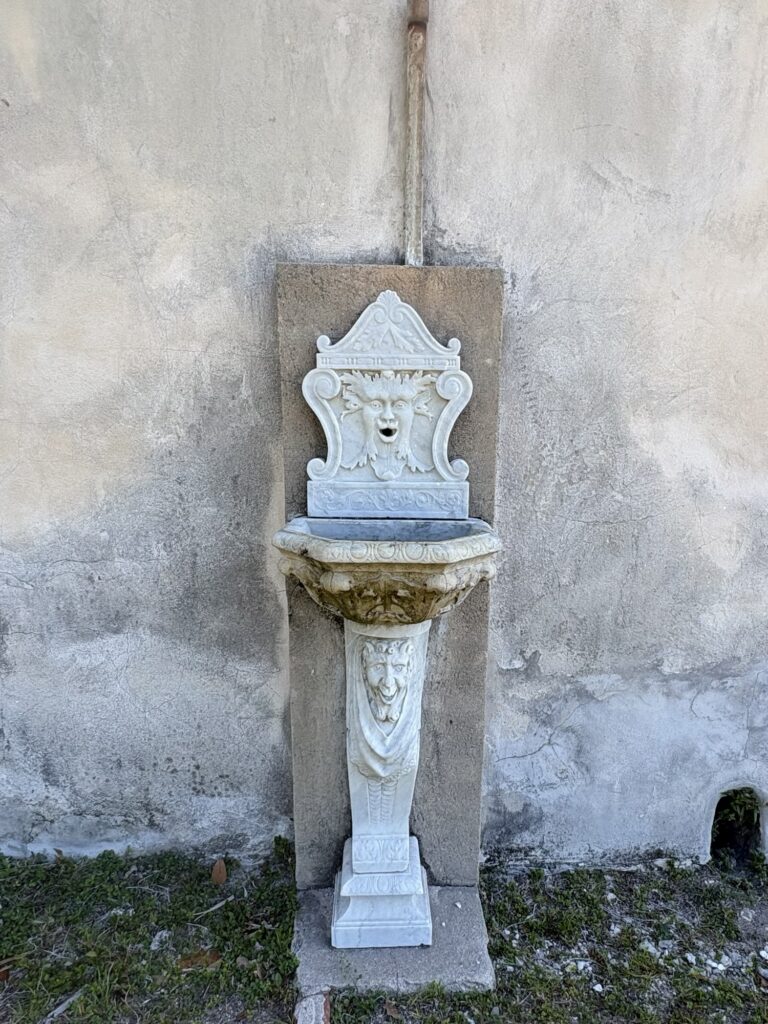
That 5600 square foot mansion mansion was built in 1886 by Thomas and Lucy Carnegie. Thomas originally bought 4000 acres and gifted it to Lucy. She convinced him to buy more of the island, 8200 acres more.
Unfortunately, Thomas died at age 46 of pneumonia. He was originally buried in Pittsburgh but Lucy had his remains transferred to a cemetery on the island. She continued the dream to live on the island and decided to raise their 9 children there. Several other mansions on the island were later built for the children. One, Greyfield, is now an inn.
Lucy died in 1916. She is buried in the Cumberland cemetery with Thomas. The family mostly left the island in 1925. Dungeness burned in 1959, likely a result of arson.
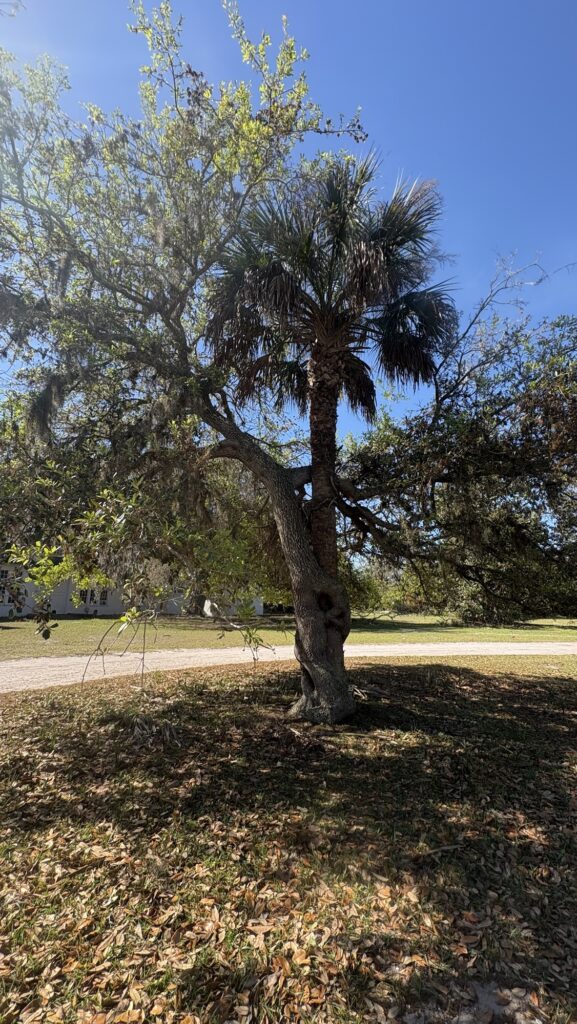
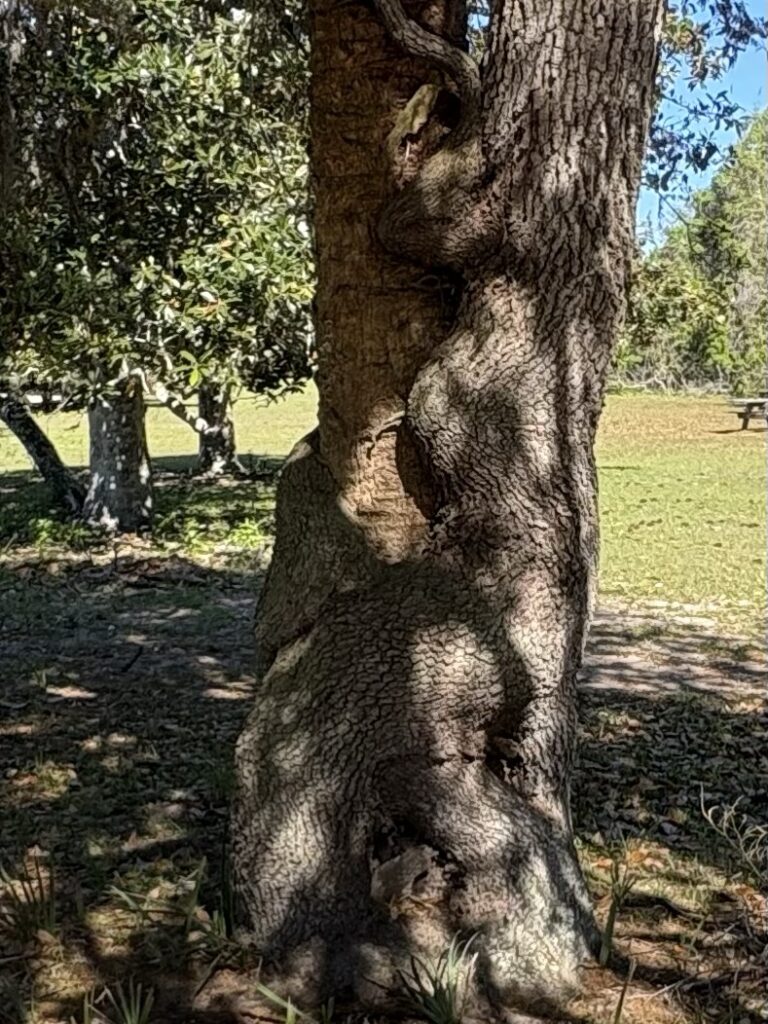
Lucy placed the Carnegie lands in a trust where none could be sold as long as any of the children were living. This kept the land from being broken up and developed. Once the trust expired, the grandchildren heirs, kept the lands intact to honor Lucy’s legacy and Cumberland became a national park in 1972.
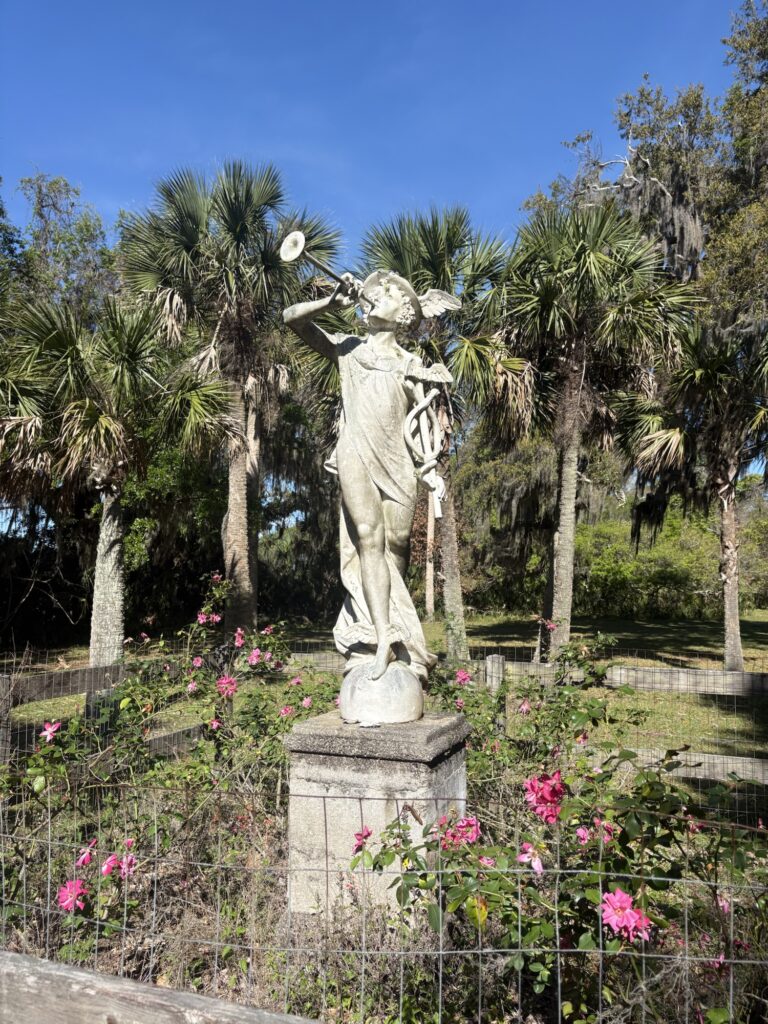
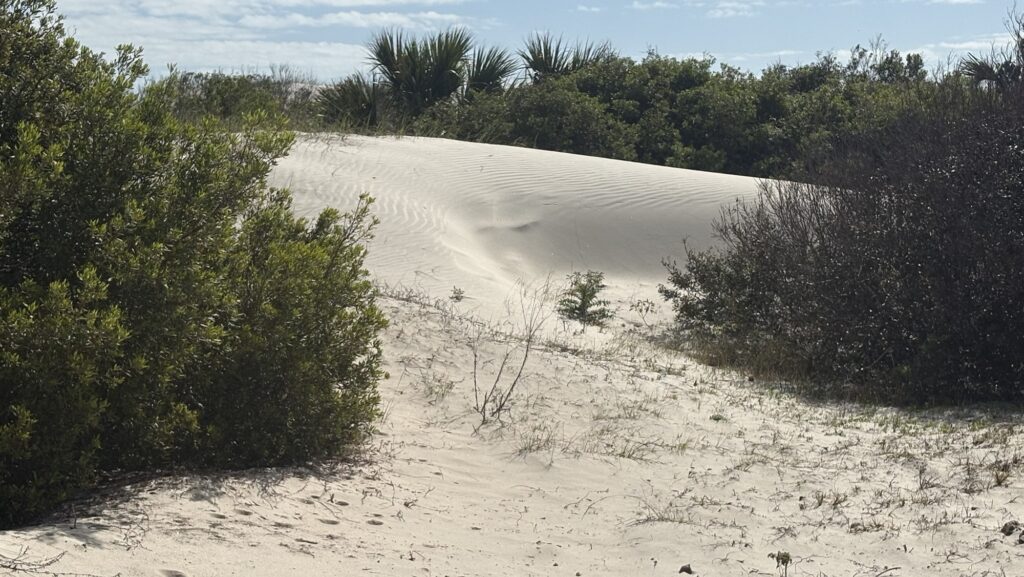
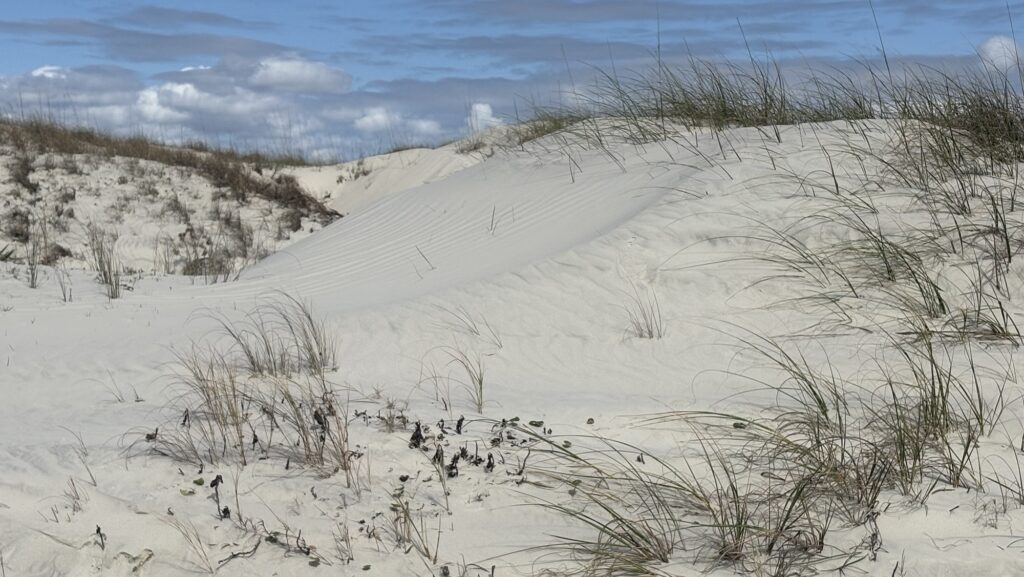
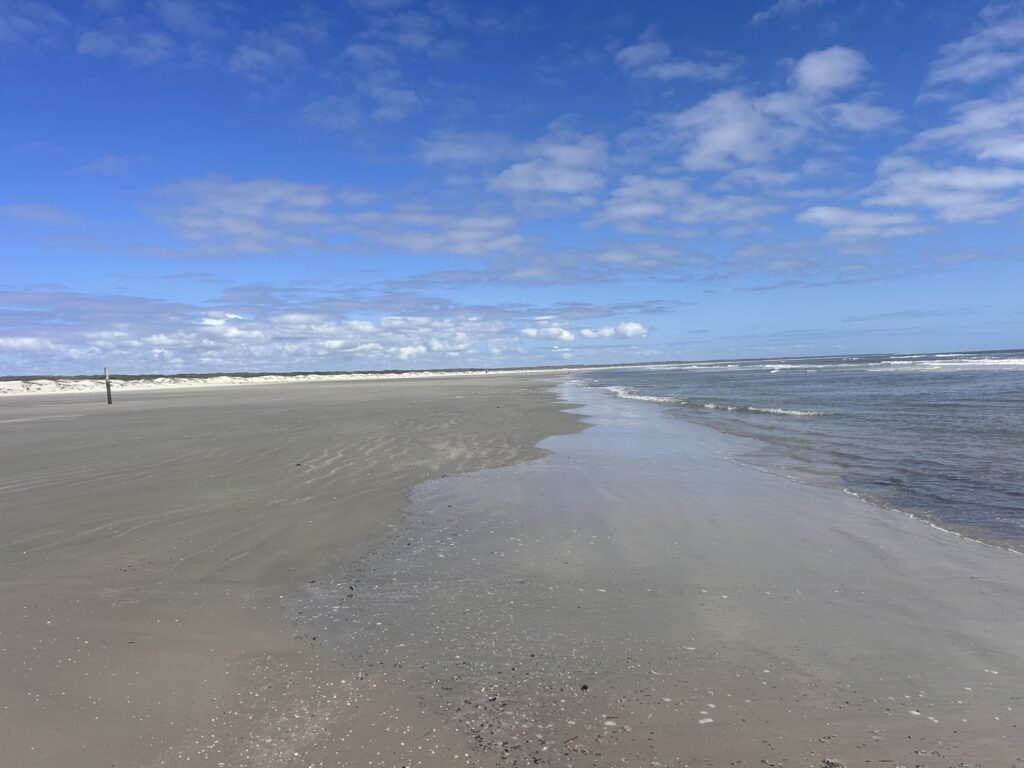
After walking round the ruins, we took a trail to the beach.The dunes were spectacular with wind ripples in white powdery sand. The beach runs for 17 miles. I swam and we collected some shells before walking back. I left wanting to see more of Cumberland Island.
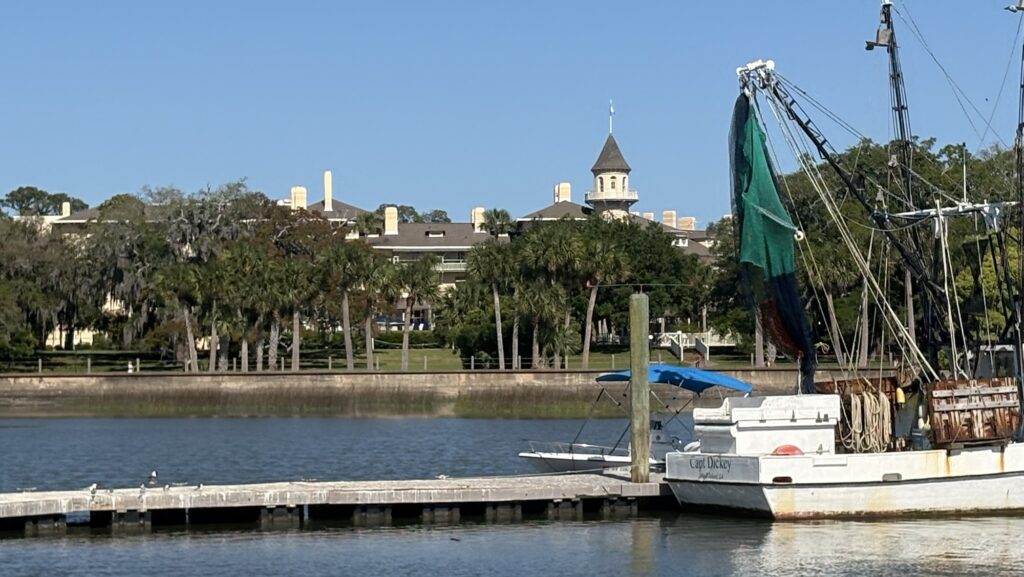
We continued up the waterway to St. Simon’s, passing Jekyll Island, arriving just before sunset. It was high tide so we did well in the shallow passage behind Jekyll. We had 7 feet under our keel. The tide drops 6-7 feet here so we definitely needed a little tide for the passage. The marina had left us room to dock and we did not have any difficulty.
Tomorrow we will visit with Steven and Christina in the afternoon.