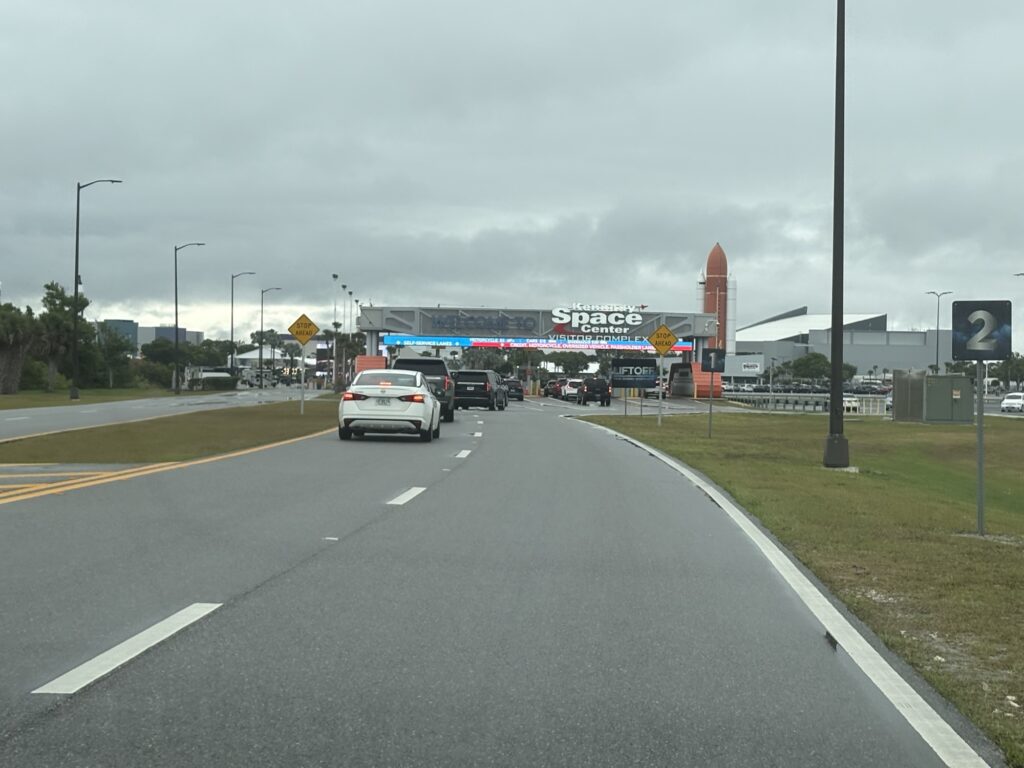
I have not paid adequate attention to the space program though I have always been amazed by it. The Kennedy Space Visitor Center is a very large space with many sections. When you walk in, there is the rocket garden, where some of the old rockets are. A tour guide with a microphone talks about the different rockets but it was difficult to hear in the wind.
We decided to go to an imax movie and then make a plan. There was just so much to see. The movie was about the future of the space program, specifically the Artemis missions where we return to the moon. Artemis 1 launched November 2022 and was successful in orbiting the moon and doing two flybys close to the lunar surface. The Artemis 2 will launch in 2026 and will be a similar mission but with a crew. Artemis 3 will land a crew on the moon in 2027 if all goes as planned. The goal is to have a sustained presence on the moon to support missions to mars. The movie also discussed the many private companies that are involved in different aspects of the space program and what they are working on. Reusability, orbital refueling and alternative propulsion systems that do not rely on fuel were common themes. We passed the sprawling campuses of space x and blue origin on the way to the center.
After the movie we decided to see the space shuttle exhibit. This one was very well done. You start in a room with a shuttle model, Then there is a movie about the development of the shuttle, from idea to testing of the first shuttle Enterprise (11 years).
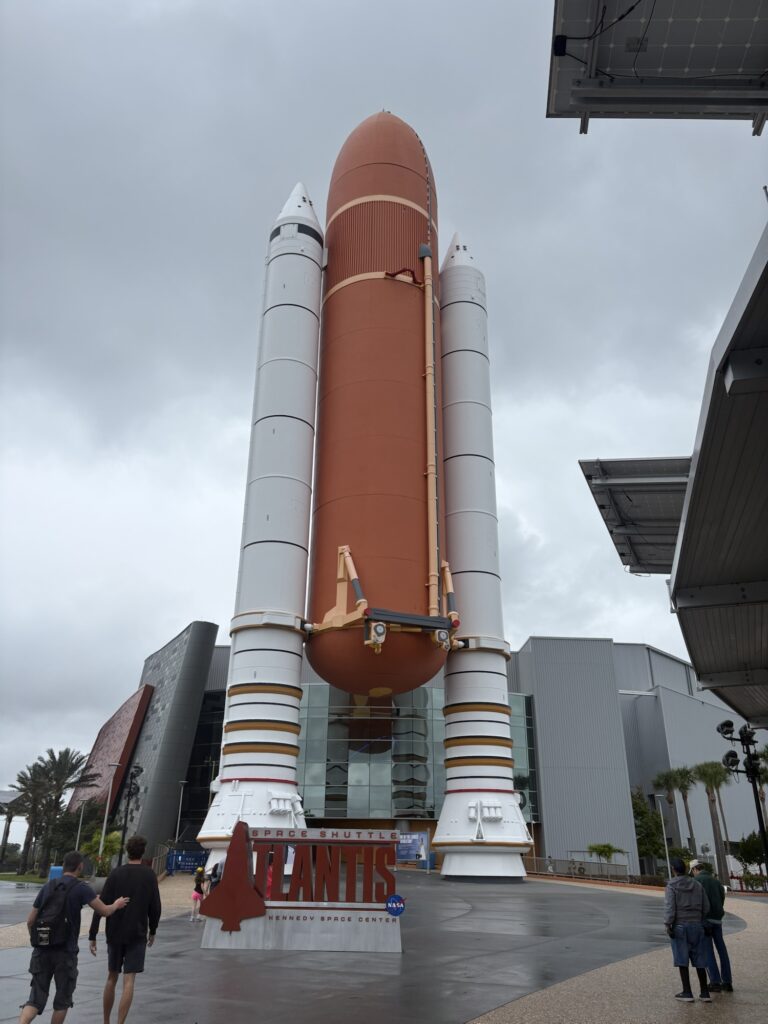
Then we went in the shuttle launch simulator and learned about the different stages of the launch and reentry. Then you go in a room where they show some footage of missions of the shuttle Atlantis and you end up with what you think is a picture of the shuttle on the screen but then the screen lifts and there is the actual shuttle Atlantis.
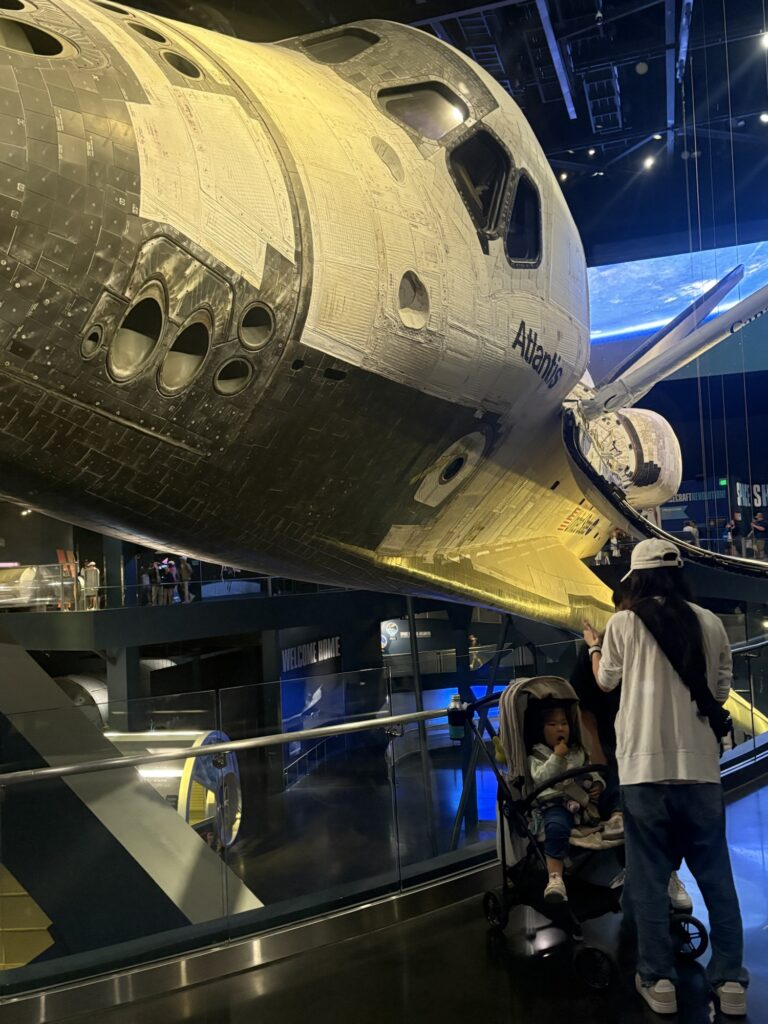
At the end of the shuttle tour is a ramp that you go down to exit the exhibit. It has a plaque for each of the 135 missions with the date of the mission and its goal, the crew, and the name of the shuttle. The tragic missions of Challenger and Columbia have a different color plaque for their final missions, in 1986 and 2003. At the lower level there is a memorial room for the lost astronauts.
We also went to the Apollo exhibit which was similarly well done. It was in a separate building and we took a bus through the center. We saw the building where rockets are built and the vehicles (crawlers) that move the rockets to the launch site. The space center borders a wildlife preserve. We could see alligators and turtles on logs from the bus.
In the Apollo building, you also went from room to room and were informed. I liked the footage of families watching the lunar landing on big box tv’s. I remember all of us camping out to watch. I did not remember how long the blackout of communication with the landing module was, or that Neil Armstrong had to take over the controls to find a smooth landing spot, one that they could leave from.
It was a fun and informative day and made us want to keep up better with ongoing space endeavors. What also impressed me was the collaboration amongst nations in the space program. Looking at the Canada arm of the space shuttle for instance and the collaboration for the telescopes and space station. Hoping that can continue in this era. Also, the diversity in the astronaut program, at least as shown at the center, was great for all the kids there. Everyone was able to identify with the astronauts. They also did a great job capturing video of older astronauts telling their own stories. It is a well done production even if all exits go through a gift shop.