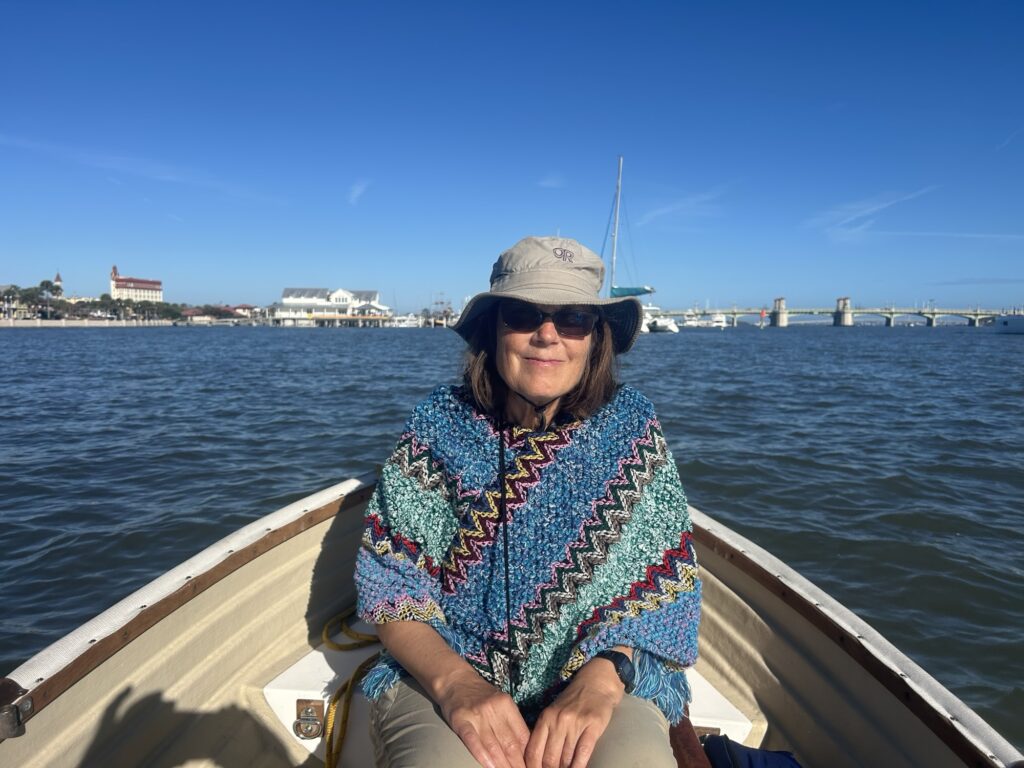
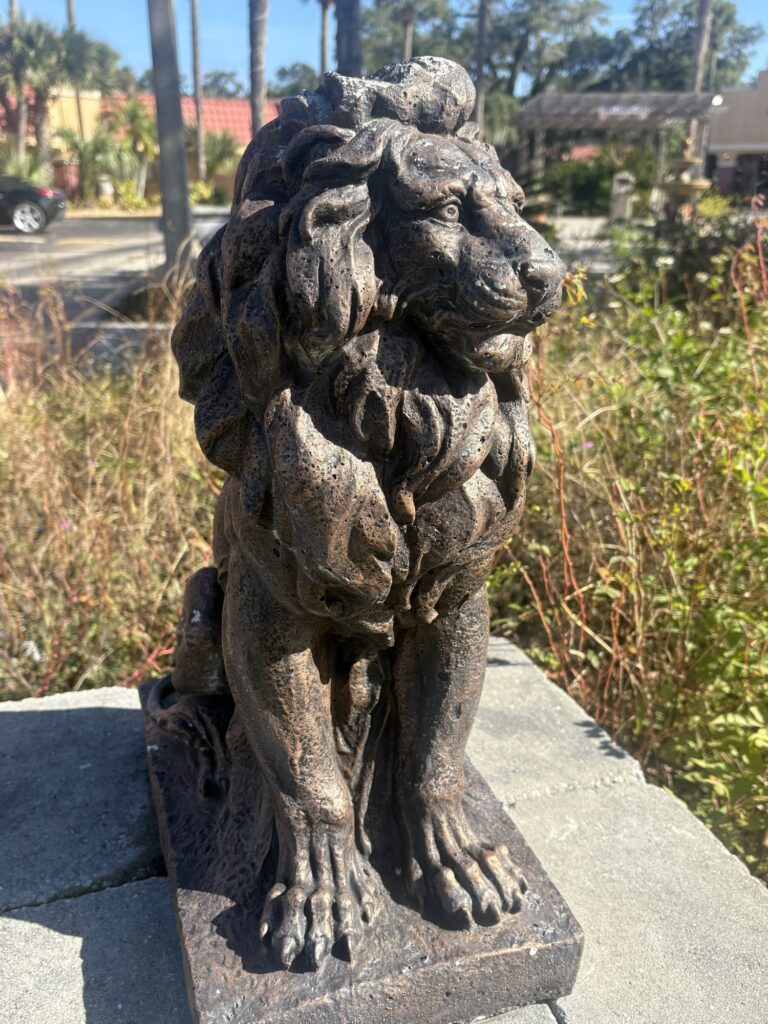
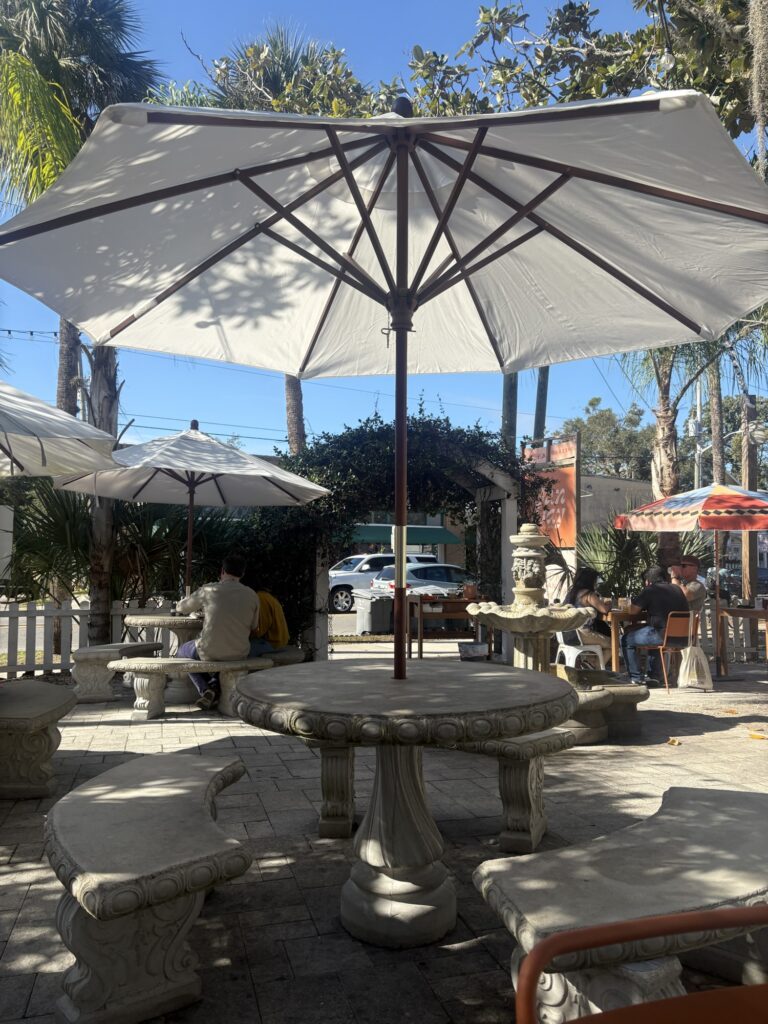
Another beautiful morning but thunderstorms predicted for the afternoon. We dinghied to shore and walked to the Fountain of Youth Park. The walk was interesting with streets lined with thrift shops, antique stores, some hotels and small cafes. There were statues along the way and fountains. We stopped for lunch at the lovely Sunday Gathering Table.
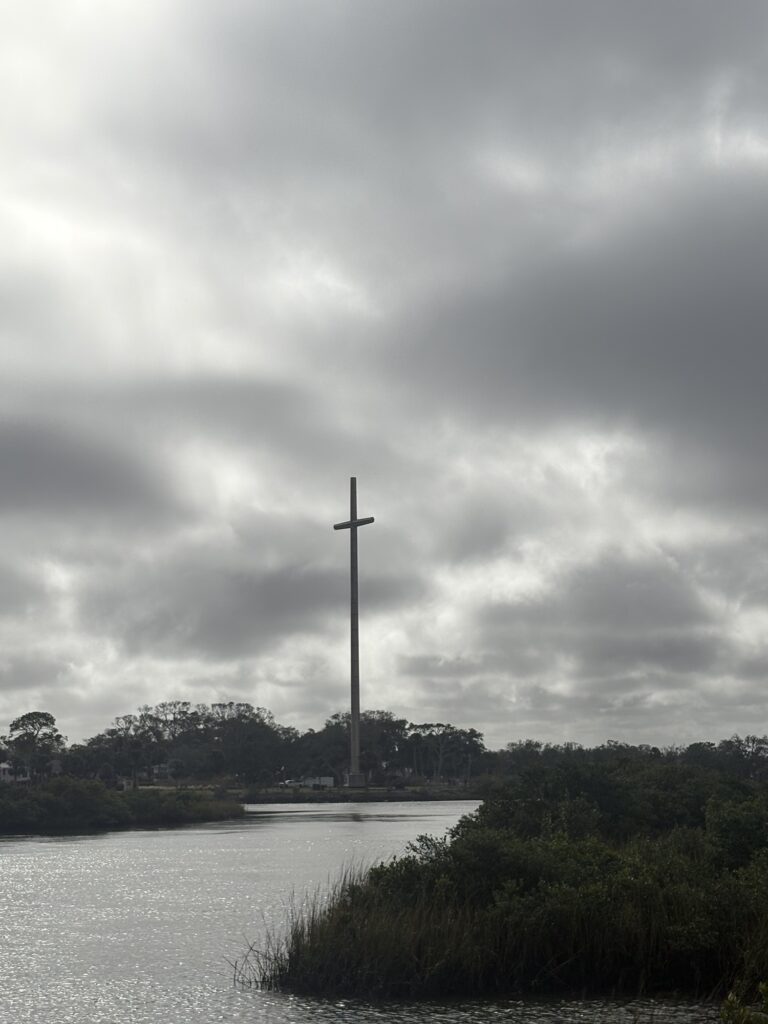
We passed the Nombre de Dios mission and walked some beautiful streets to arrive at the park. They started excavating here in 1934 and found what they thought to be the cross marking the original landing place of Ponce de Leon, the cemetery and remains of the church of the first mission Nombre de Dios , and remains of the Native Timucua settlement Seloy as well as remains of the first St. Augustine.
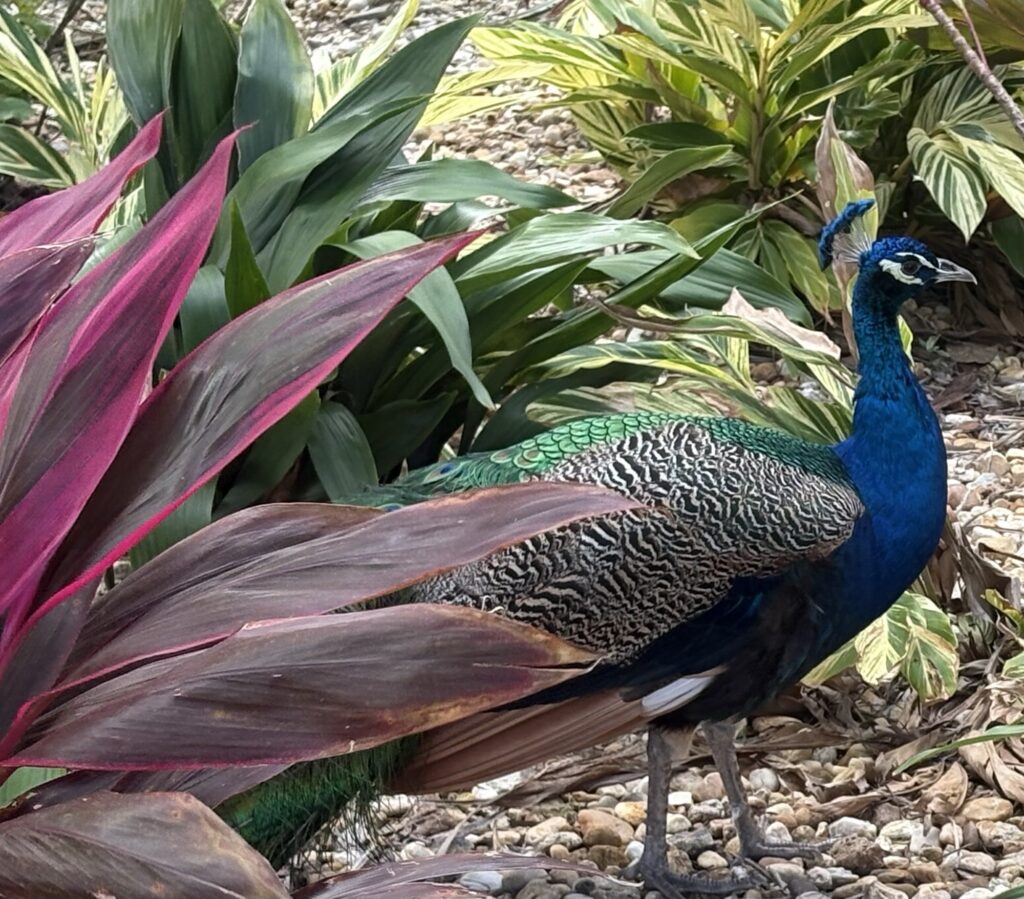
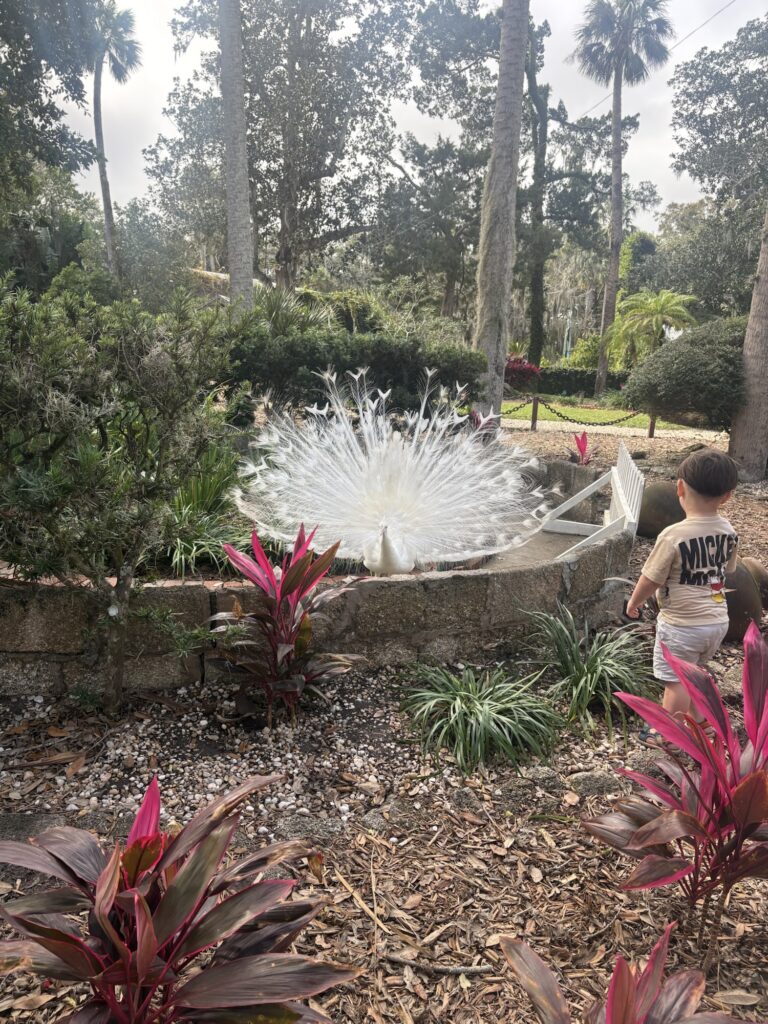
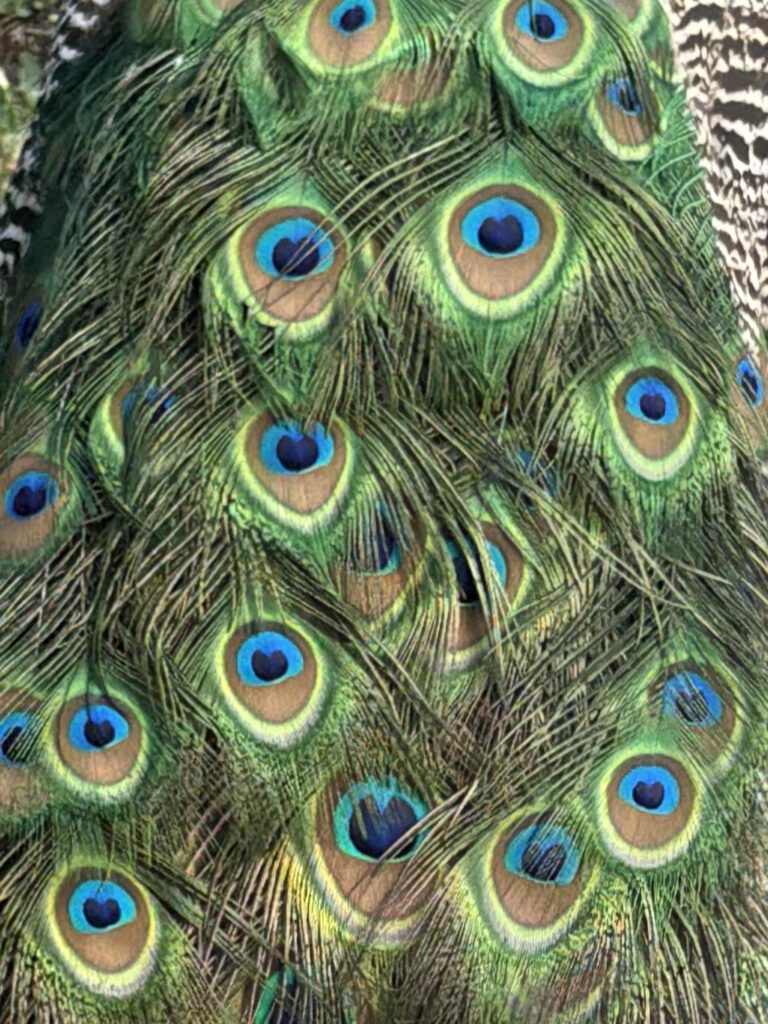
We went and had a sip of water from the Fountain of Youth which contains many minerals including sulphur. Peacocks of all kinds roam the area. We went to a planetarium show that was specific to celestial navigation. They had the astrolabe and other early navigation instruments on display. The youngest crew member was in charge of turning the hour glass, or in most cases the 1/2 hour glass which is how they measured time and speed. The day on the galleon was divided into 6 four hour shifts. Quite amazing that they made it anywhere and back more than once.
Our day would not be complete without a little history of the Timucua people and Juan Ponce de Leon. The ancestors of the Timucua lived in the area for thousands of years. They buried their dead in mounds that they reused. They were able to extract starch from the very poisonous coontie plant. They were living in the village of Seloy when Juan Ponce de Leon arrived. They were originally friendly.
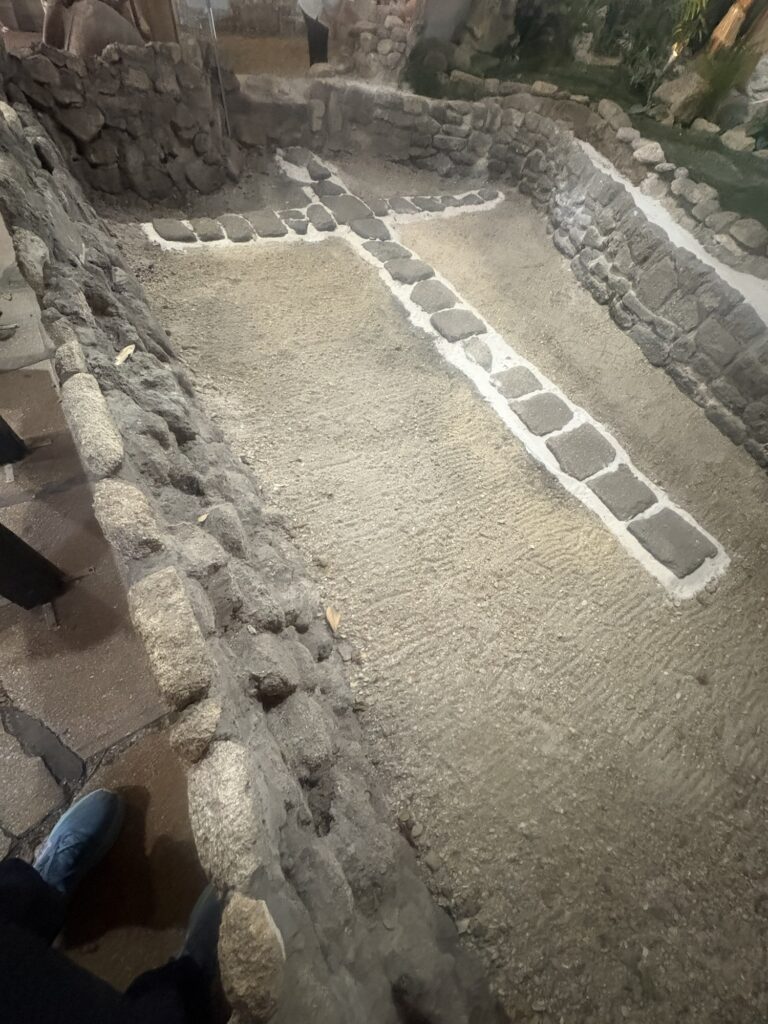
Juan’s father was a nobleman but his mother was not. He was apprenticed as a soldier at 9 and performed well for the Spanish in the Seven Years’ War. At the age 19, he sailed with Christopher Columbus’ second voyage in 1493 and ended up in Puerto Rico where he rose to the rank of governor until revolt caused him to flee. In 1513, he arrived by ship at the village of Seloy, laid a cross of stones on the ground and claimed the land and the spring that was the Fountain of Youth for Spain and for God.
The Spanish settlement, led by Pedro Menendez de Aviles in 1565,and the Catholic mission soon followed. The natives likely died in great numbers from new (to them) diseases and were buried in single Christian graves. The natives did revolt and chased the early settlement to Anastasia Island for a time.
Juan Ponce de Leon sailed on many other voyages and later died as the result of an infected arrow wound. He tried to leave his wealth to his family but his agents sold his things, including his ships, and kept the money. His grandson was able to get his remains to a church in Puerto Rico.
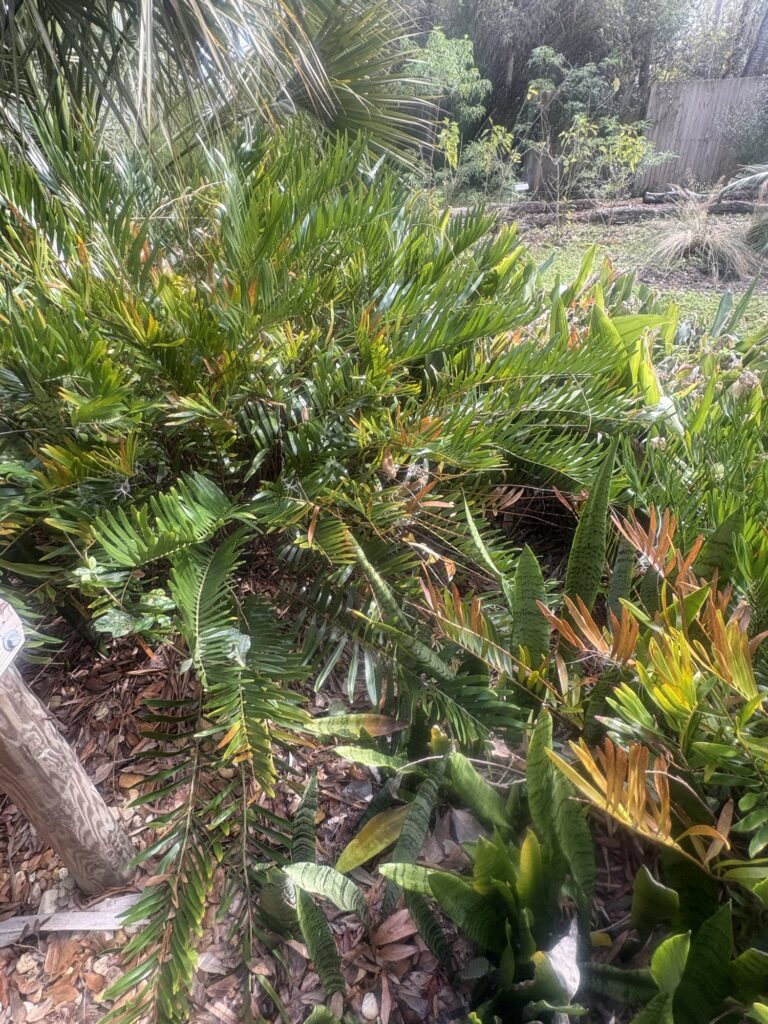
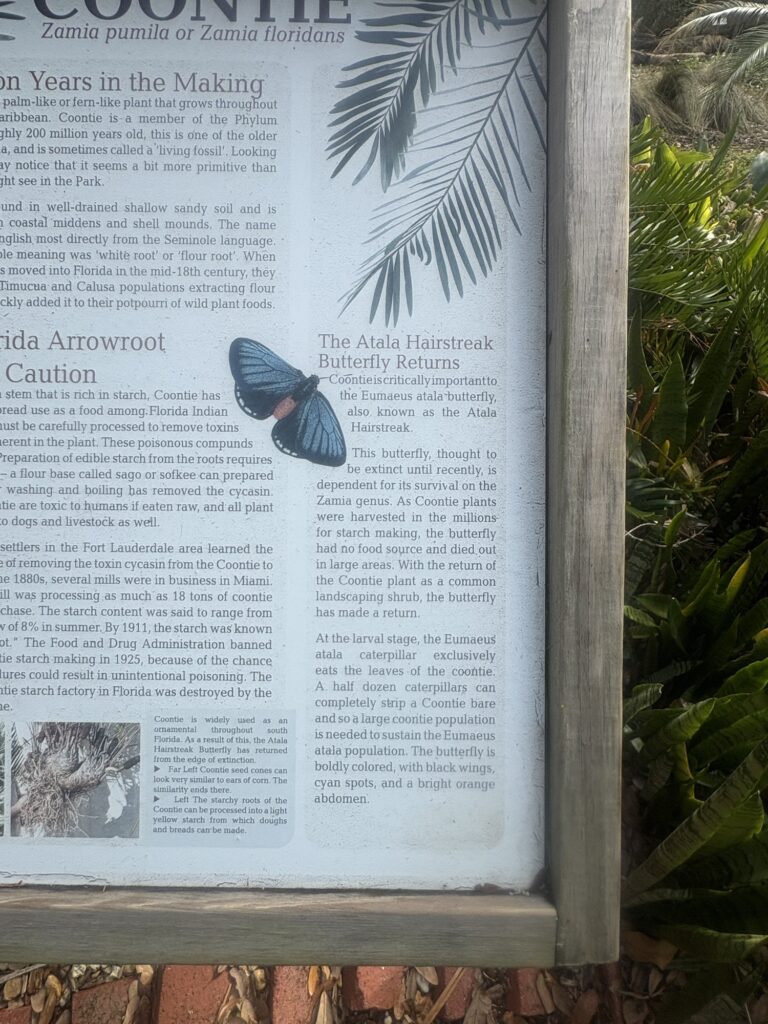
The native coontie plant is very poisonous but the native people could extract starch to make a flour for bread from its root. This process was replicated by settlers and later industrialized by Floridians until it was outlawed by the FDA in 1925 due to dangerous complications. This did not happen before near eradication of the plant in the wild. The Atala butterfly, which exclusively uses this plant in its larval stage, was thought to be extinct. The Coontie is now a common landscape plant (grown from seed) and the butterfly has returned.
One correction to our blog about Coquina. I thought from the information at the fort that Coquina was made like Tabby but it is really a sedimentary rock created by the ocean action to break the shells and pressure. It is a naturally occurring form of limestone that was cut into bricks. There were quarries for this purpose on Anastasia Island.
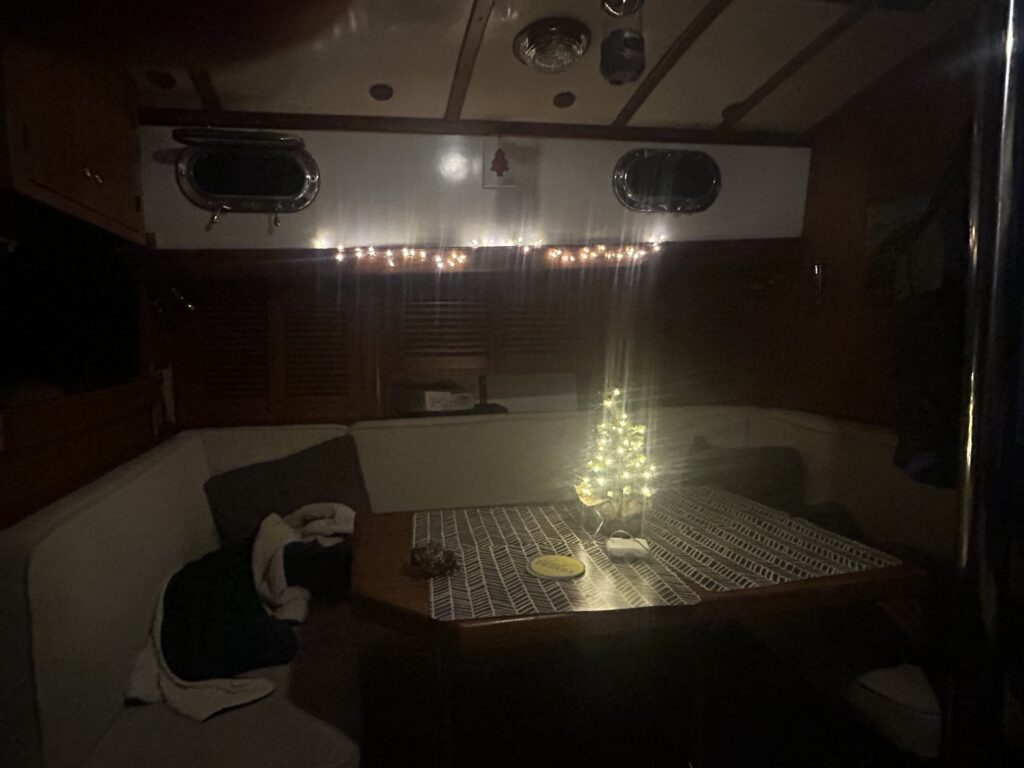
As we walked back to the boat, we made one last stop at Kilwins for ice cream. Storm clouds were over the inlet but we never got a thunderstorm. We replaced our dinghy on the deck in anticipation of tomorrows departure and enjoyed the beautiful evening.