Some other boaters were interested in joining our tour. Laura from S/V Aurora, a Pacific Seacraft and Teri from Captain Kidd, a small motor cat, were interested in coming with us. We found enough bikes to ride over. It was a short trip without the meanderings of yesterday.
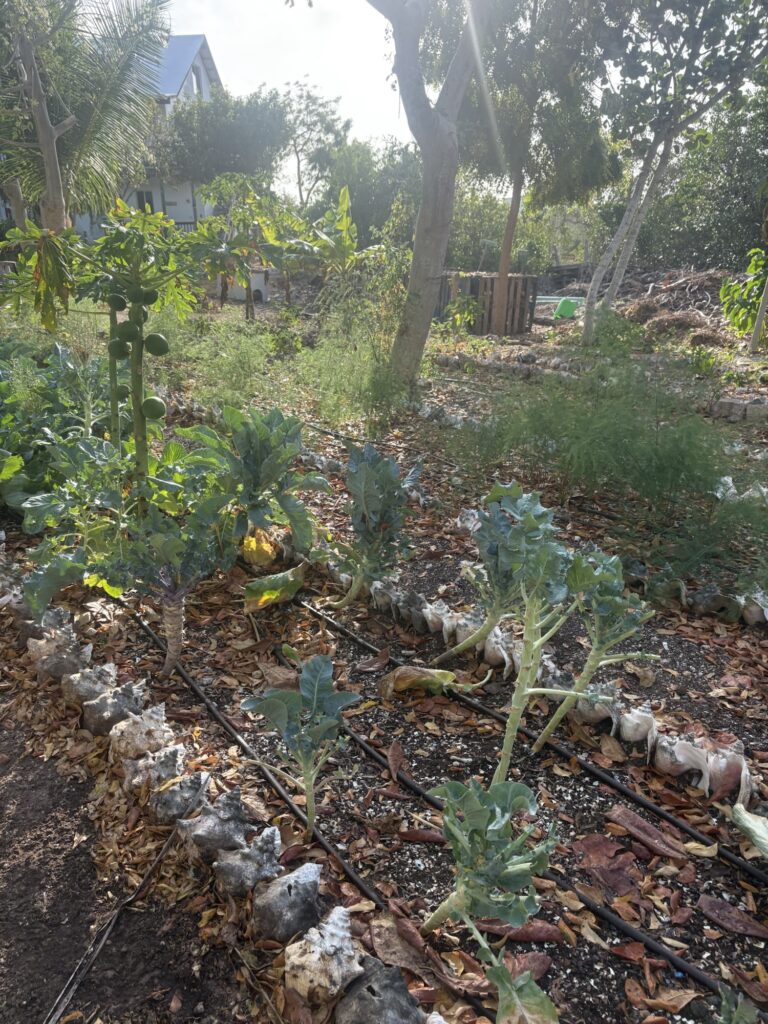
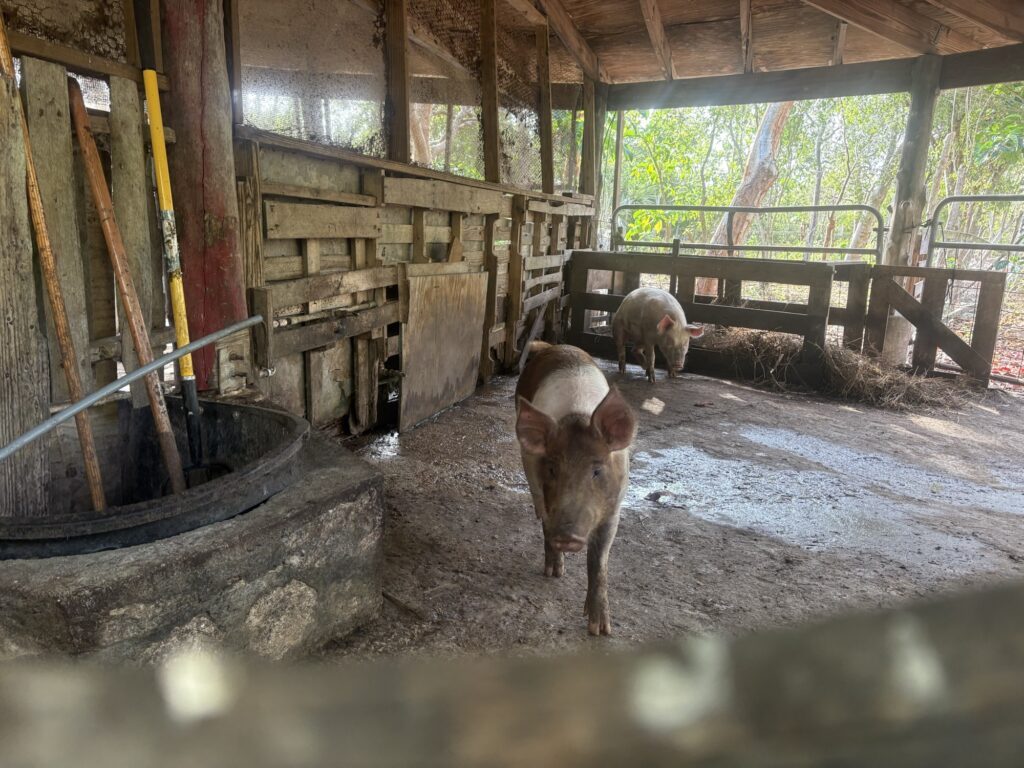
Mitzi was our tour guide and took us around the school. We walked through the garden first, where there were vegetables growing. They also have a chicken house for eggs and two pigs. The pigs have a water spigot that they must activate to get water. “No problem, pigs are smart”, Misty tells us. Pigs may be off the menu for many kids. The school grows and raises 80% of the food for the students and staff.
The school was founded by a teacher and his wife from the Lawrenceville school in the 1990’s The land for the school and later the institute was donated by the Devoe family who owns the marina. They had some summer camps initially and had their first group of students in 1999. Now they have two 100 day semesters and one shorter summer term. This semester, there are around 60 students. They employ 90 staff. There is an early learning center on campus for families living nearby.
The tuition, room and board is $32,000 a semester. There is financial aid and some scholarships, some specifically for Bahamian students but they have trouble attracting them. There is difficulty with integration of the curriculum back into the Bahamian system. A student is only allowed to attend one semester.
The students are unplugged when they arrive, phones go into storage and they have one family call per week. They have laptops for study but internet access is limited. Mitzi says the students are savvy hackers and they have to constantly change computer settings.
The dorms are nice with large porches. There is a bike shop where students can get bikes and helmets. Their day usually starts with a morning ride at 0630. They have access to the many trails and roads around the marina.
The showers are outdoors and there is no hot water. Showers are limited to 3 minutes. They eat their meals outside at tables on a covered deck facing the water. Teachers and students eat 3 meals a day together.
There is an 8 day kayak trip with a 48 hour solitary portion spent on a beach. They are given a ration of food and water. They also provide a tarp and netting. Another part of the curriculum is an in island trip where students go into towns to interview Bahamians to try and get an understanding of what life is like on the islands.
We later met an alumna of the school who was visiting at the marina with her family. She spoke highly of her experience and told us how the first 50 days have a self-reflection focus and the remainder, a community focus. Sustainability and ecology part of the entire experience.
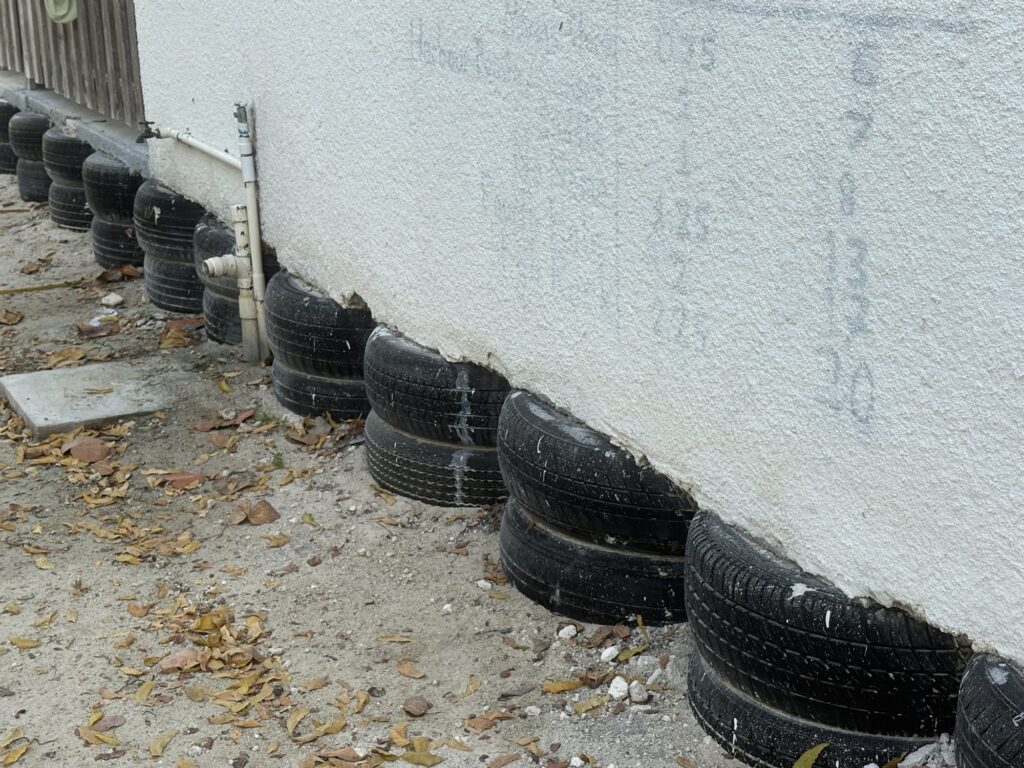
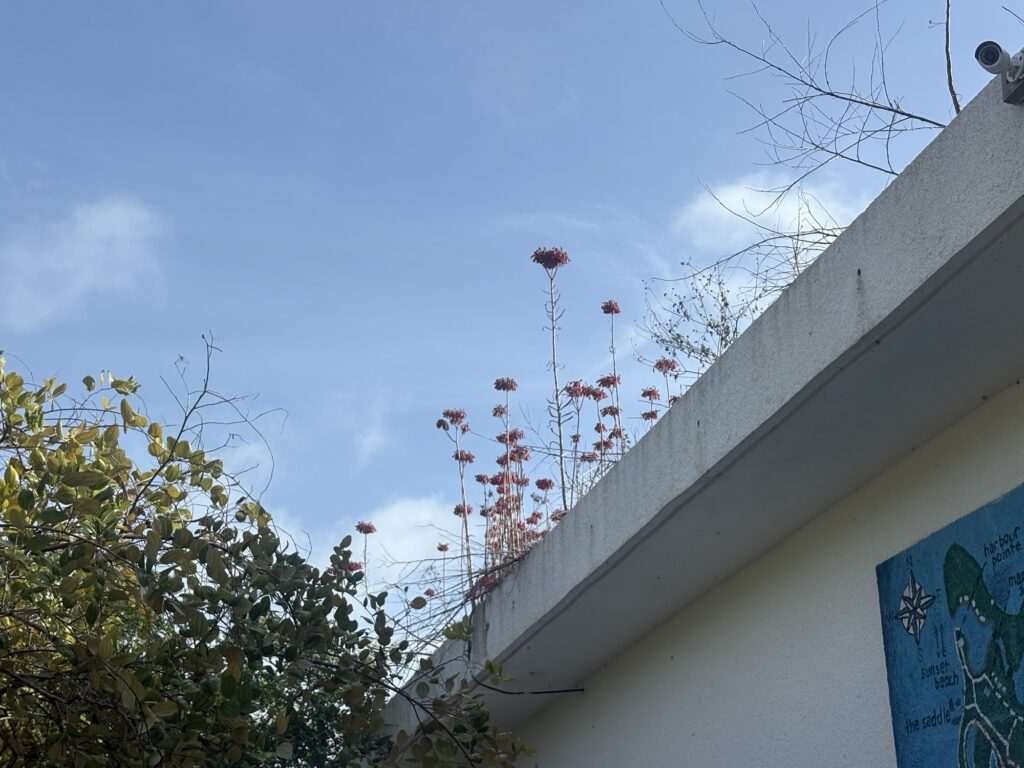
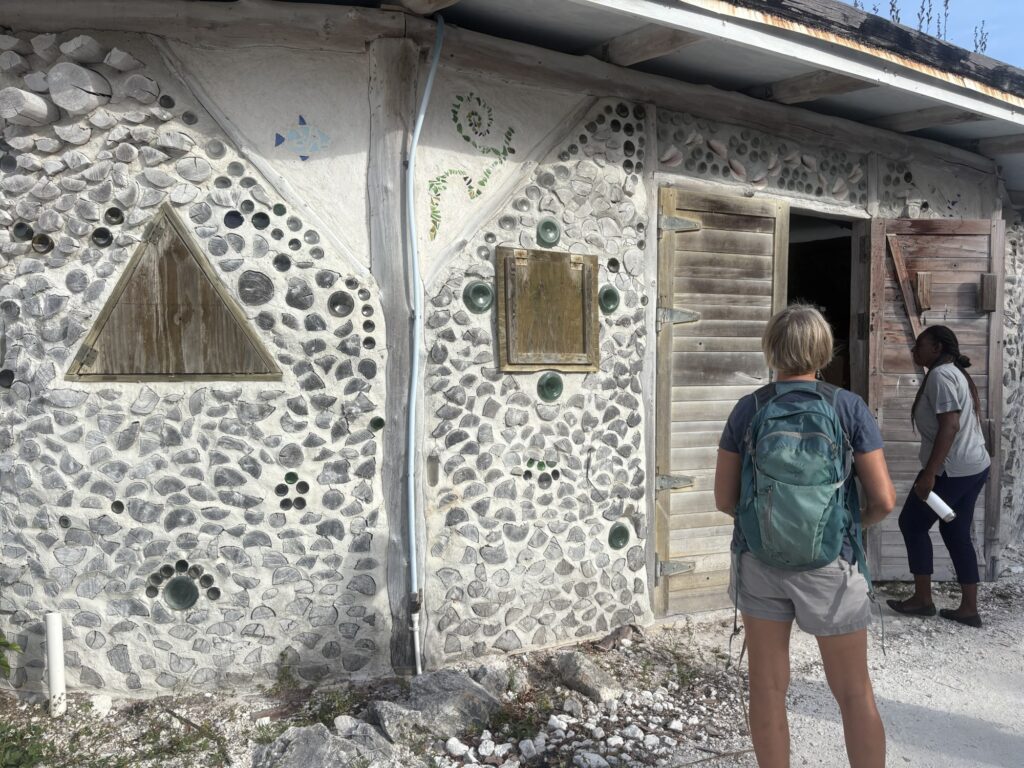
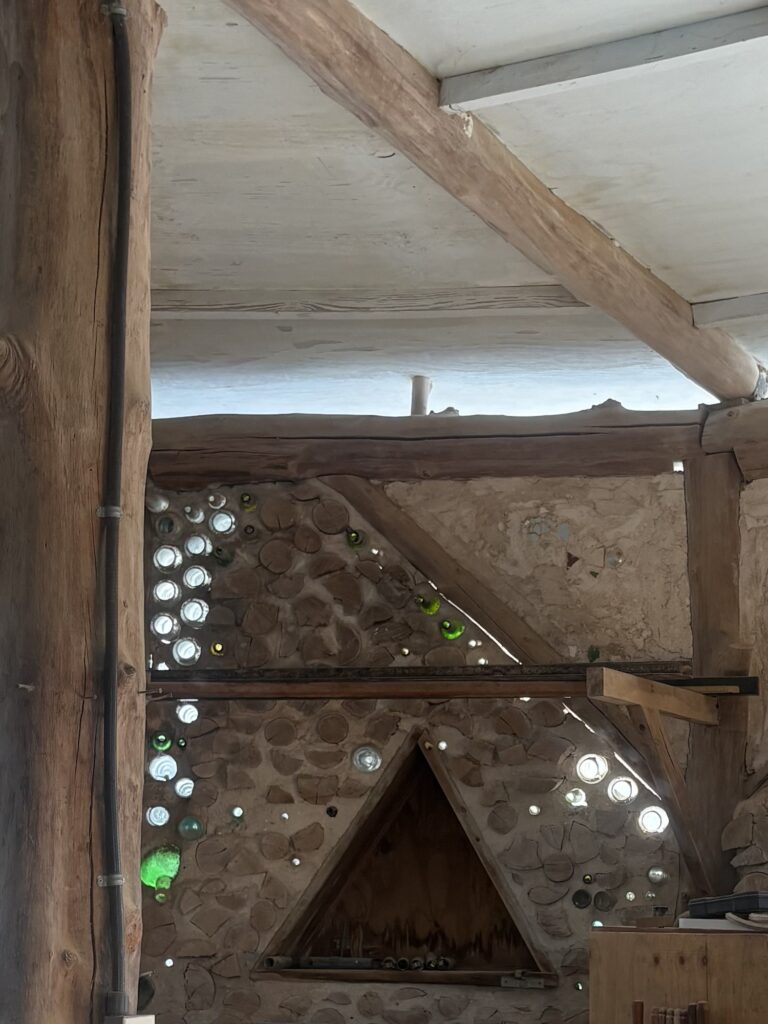
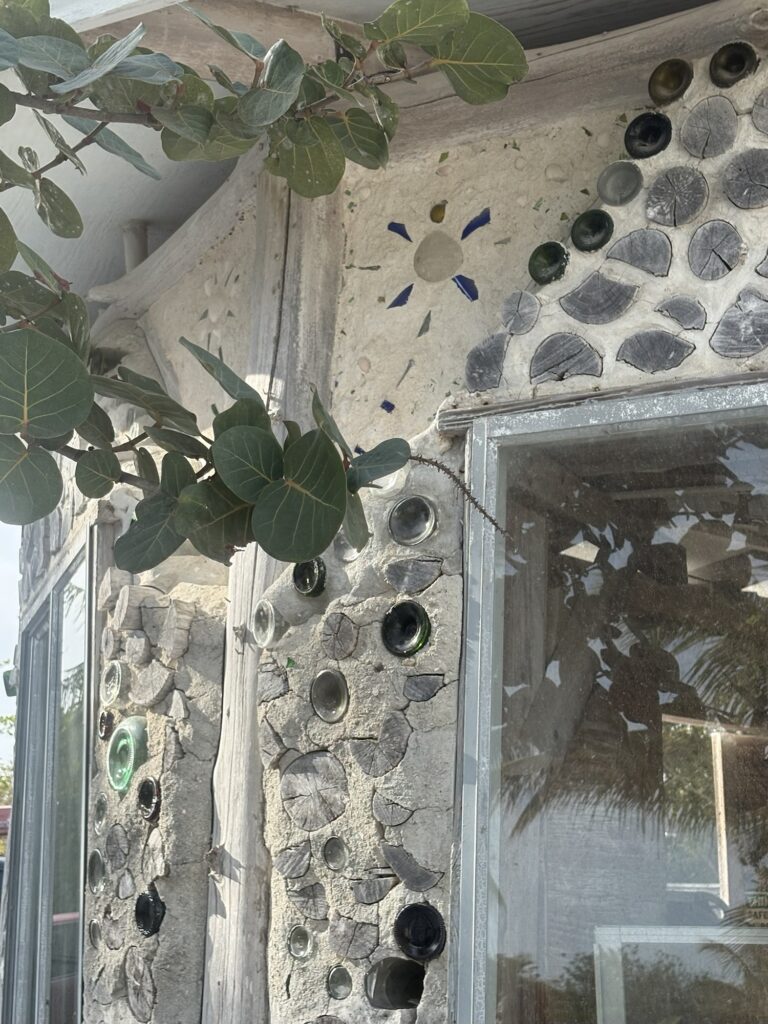
The buildings were interesting, the early buildings were built with local wood from the casuarina trees. They have a very dense wood and are long lasting but difficult to work with. The wood workshop was a beautiful round building made with casuarina beams and blocks in a limestone cement. Old glass bottles were used in the walls to allow more light.
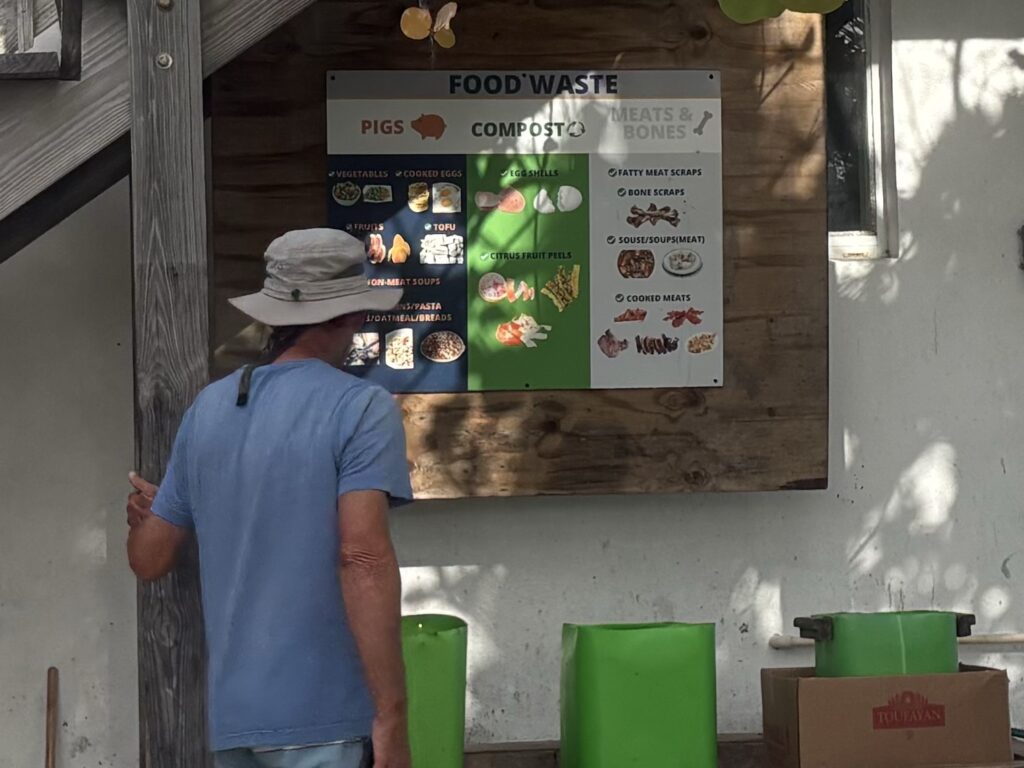
They have solar and a wind vane that does not seem to be working well. They get water from underground cisterns that can hold 170,000 gallons. They have their own sewage treatment and all the food waste is composted. They used to have a biodiesel plant where they got the used cooking oil from cruise ships and made biodiesel from it. They are no longer doing this.
Several weeks before the end of the session, they have a parent’s week. Parent’s can visit during the day. They have some lodging available at the institute but most stay at the resort or in the town of Deep Creek.
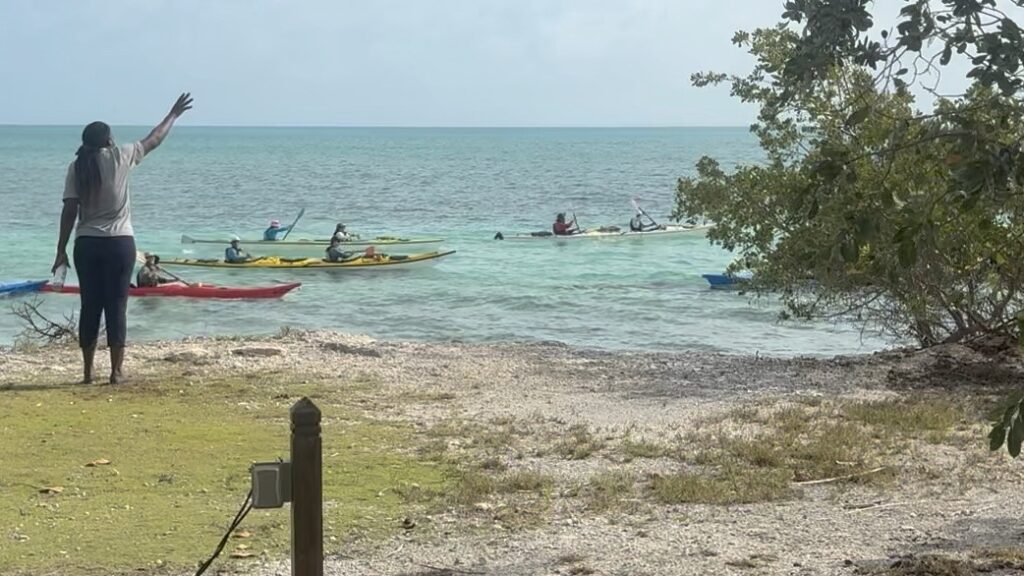
While we were on our tour, the 8 days kayak tour team returned to the beach. They were very happy to be back and all smiles at their accomplishments.
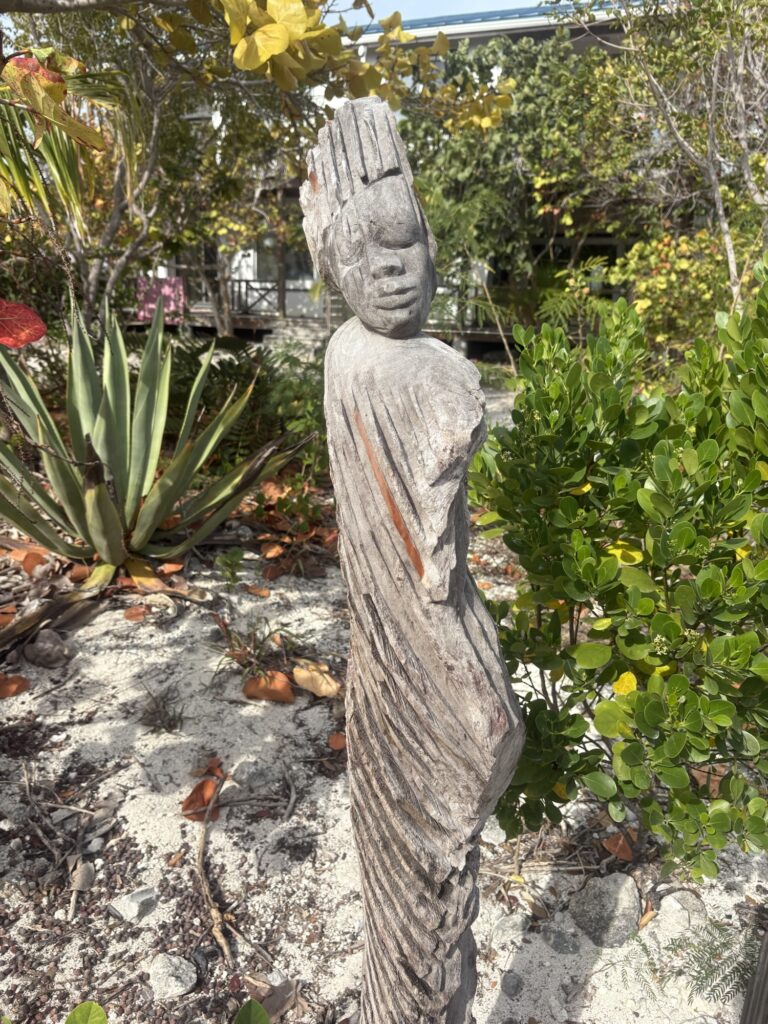
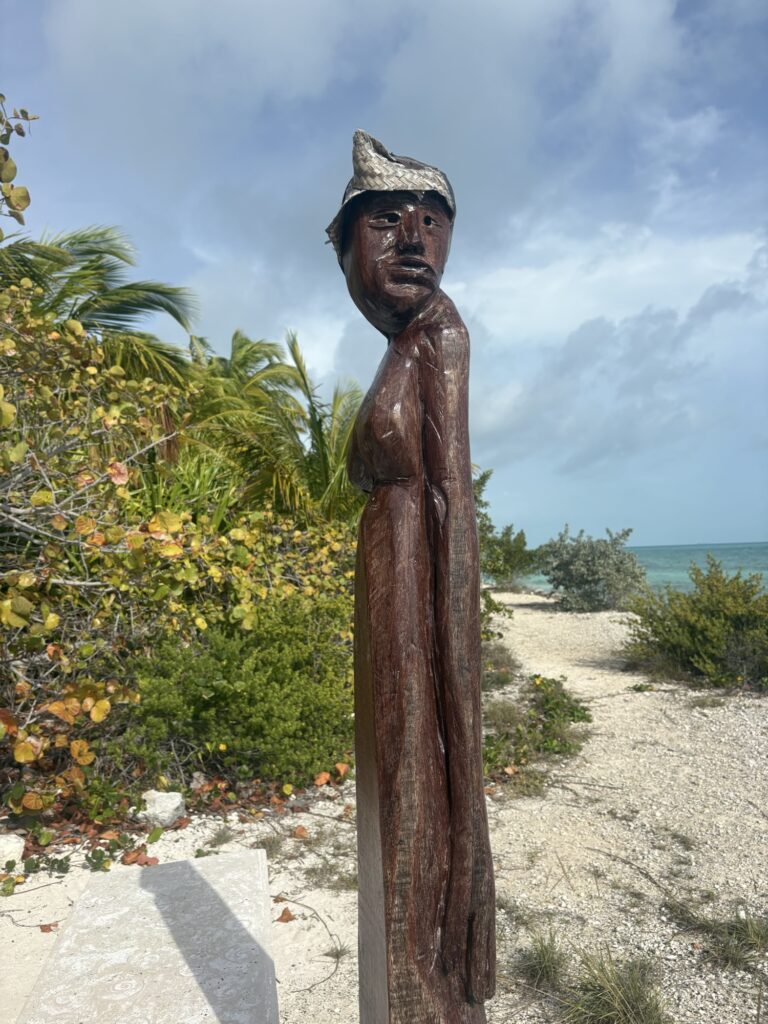
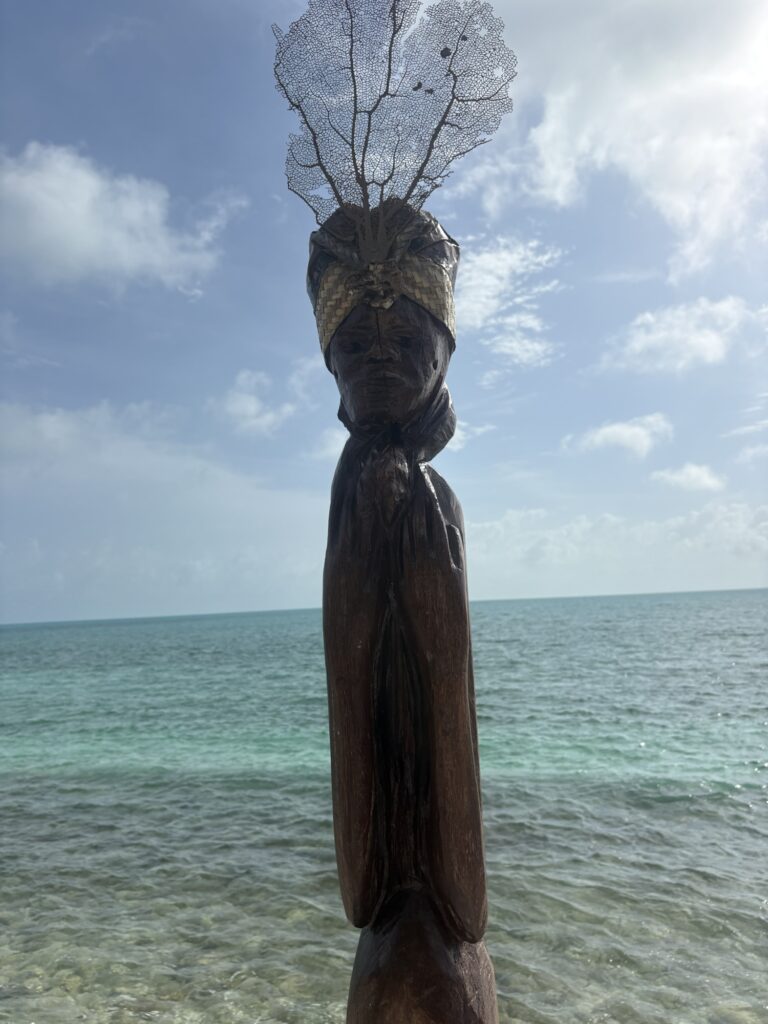
After touring the school, we made our way to the Institute where research is done and the food is grown for the establishment. There were some interesting wood sculptures along the path over a shallow lagoon.
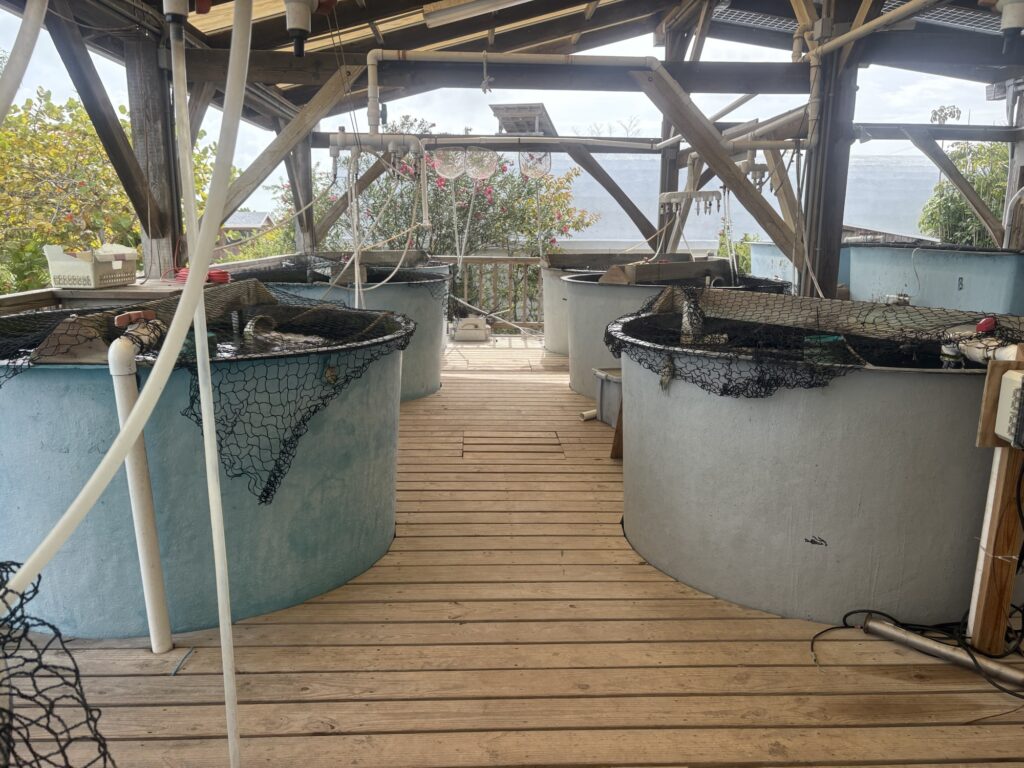
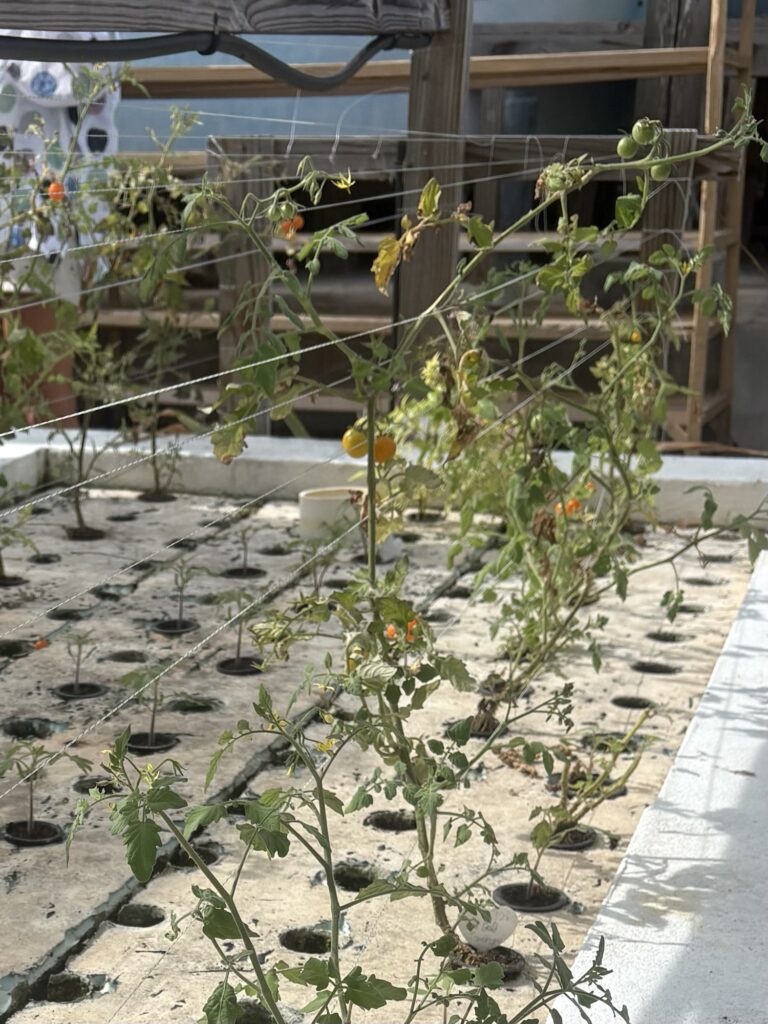
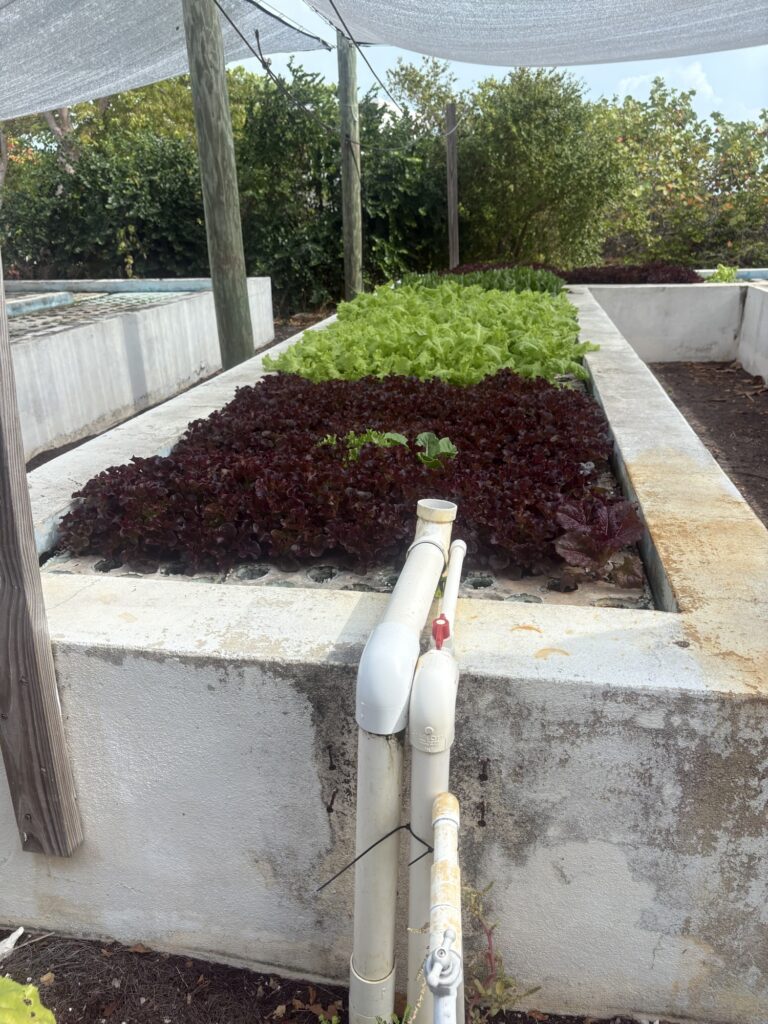
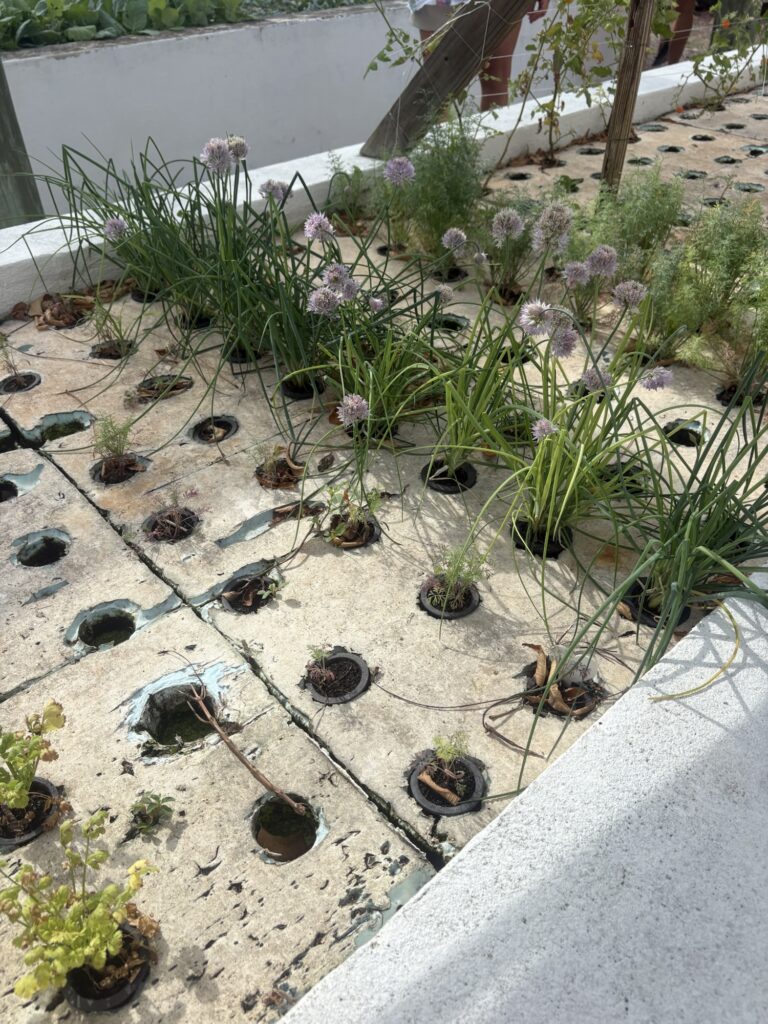
They have quite an aquaponic farm. The seedlings are placed in coconut coir plugs which are placed in a water trough. The water is fertilized by fresh water contained in tanks where they raise tilapia.
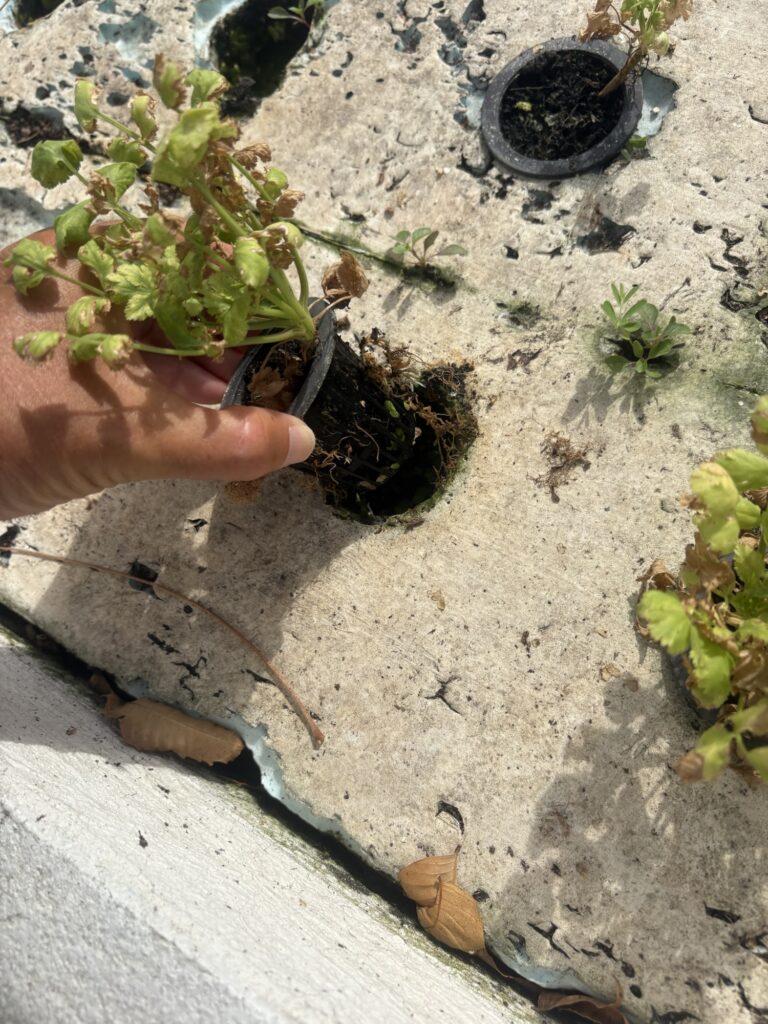
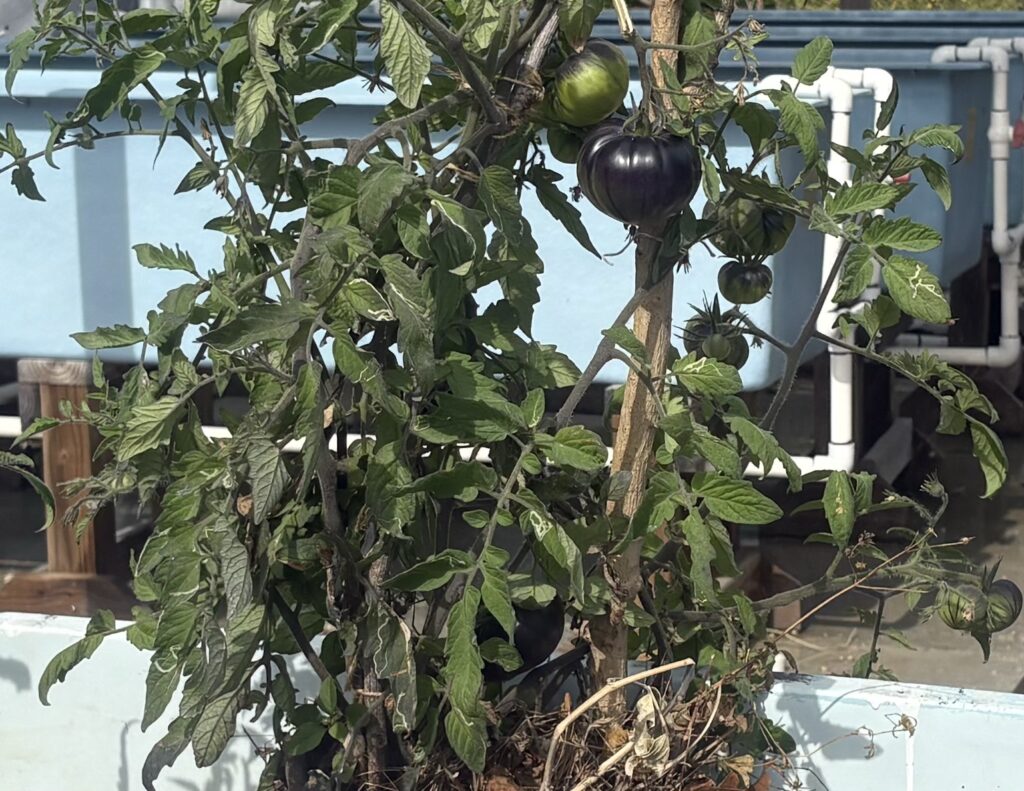
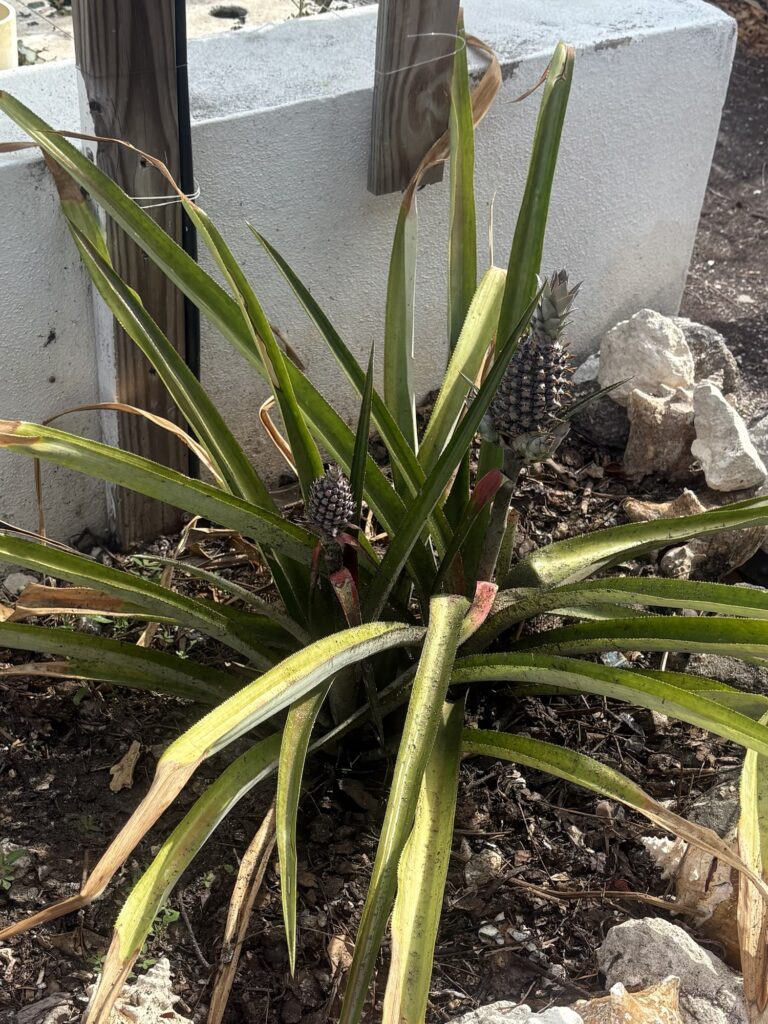
All sorts of vegetables are growing. We sampled the cherry tomatoes which were delicious. The plants are open to the air but I did not see many pests. They do not spray. The lettuces were beautiful. This gardening strategy is being modeled for the Bahamas where there is little soil to grow food.
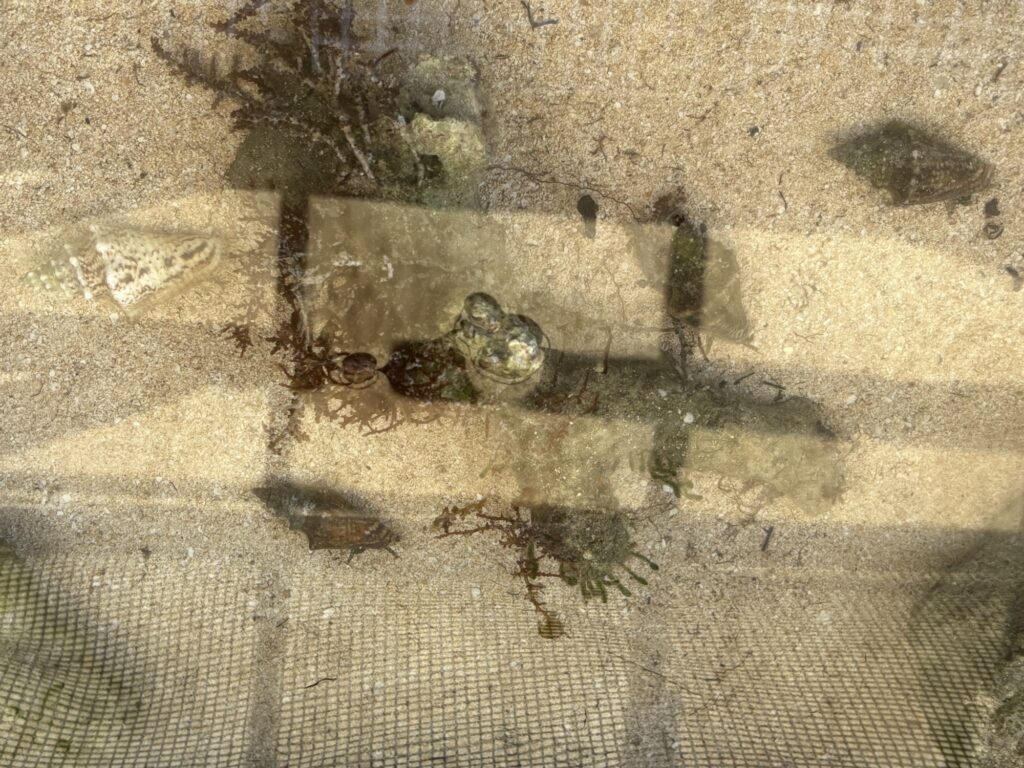
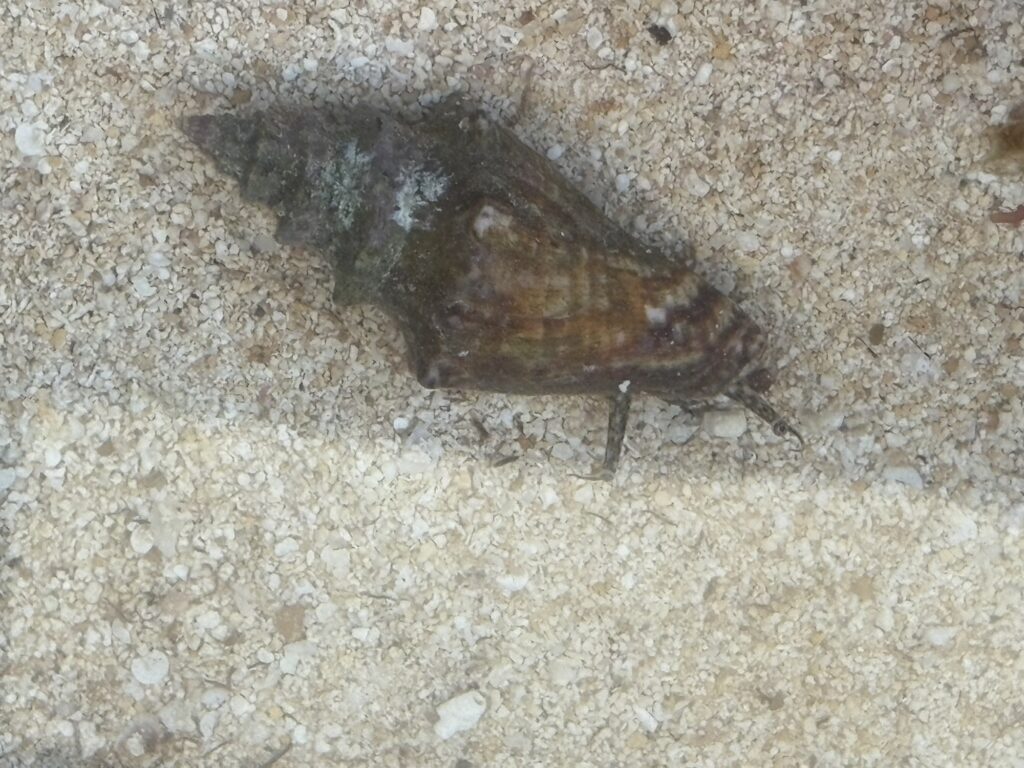
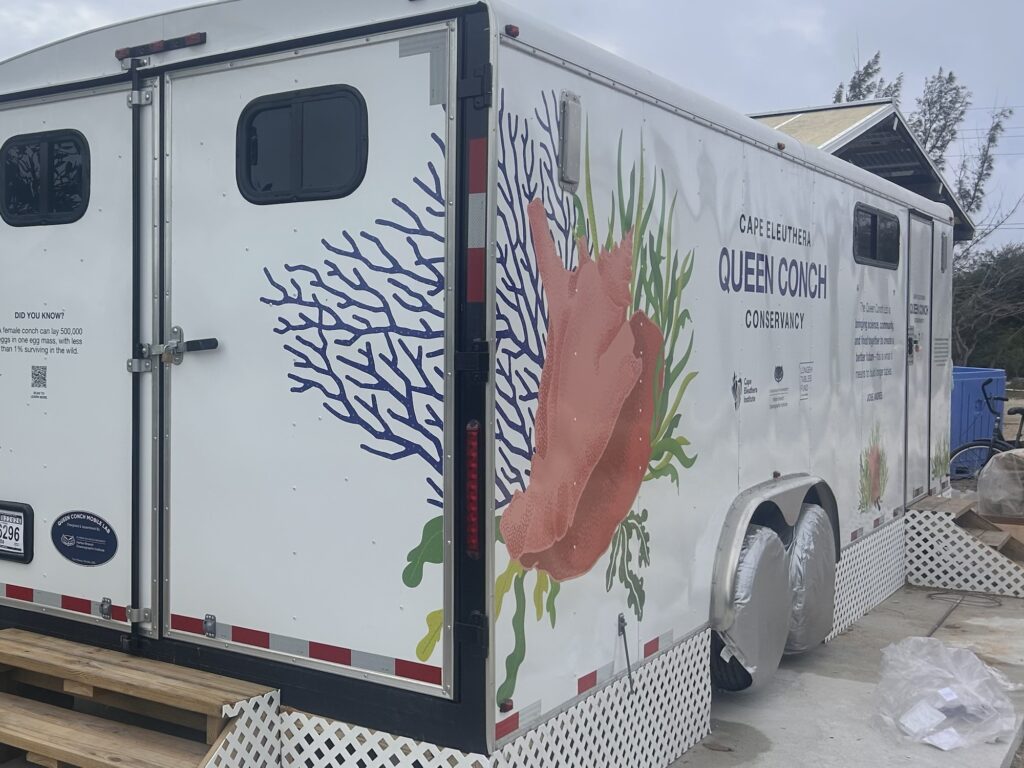
We spoke to an intern who is researching queen conch and trying to replicate a process to get them to spawn in captivity. He is also working on raising juveniles in tanks. They were recently given a van to support conch collected from different areas. We saw some juveniles in the tank. Their shells are not yet brightly colored. The students could hand feed algae to them.
The visiting scientists at the institute interact with the school students and expose them to research and field work. It is a really amazing place.
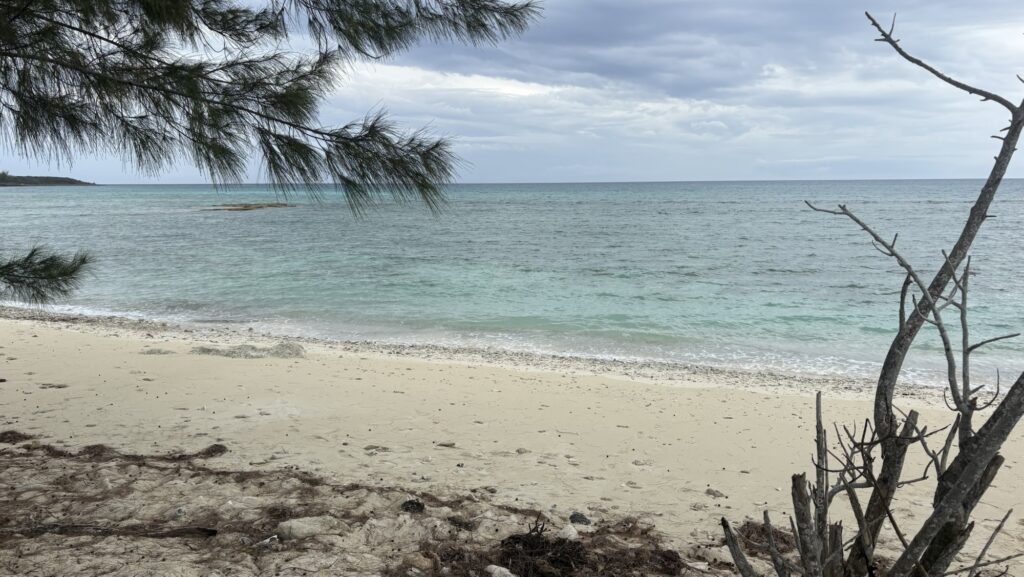
It was threatening rain with some distant thunder during our tour but fairly clear when we left. We stopped at the cove to jump in and cool off. We loved our day at school.
In the afternoon, we rode bikes to 4th hole beach and snorkeled the reef there. It was a little murky but we saw some good coral and fish and got a good swim.