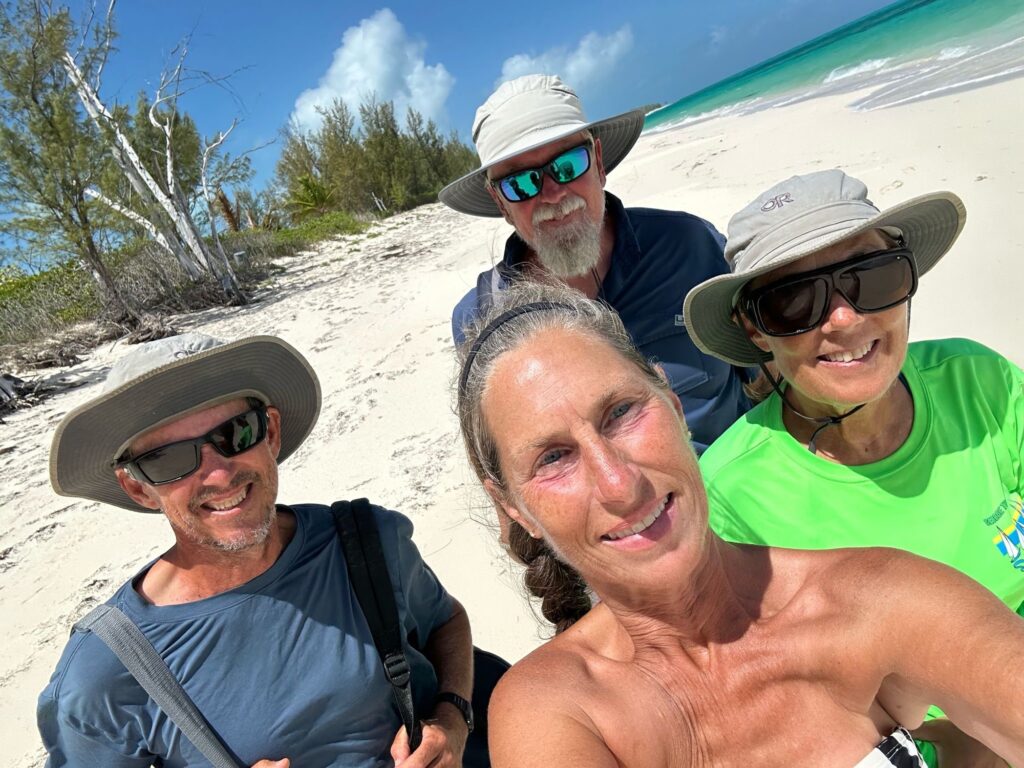
High winds were predicted for the day. It was our second to last day in the Bahamas and our last day with Deb, Jeff and Dawson. They have been so kind and helpful and fun travel companions. We hope to catch them somewhere on their journey north.
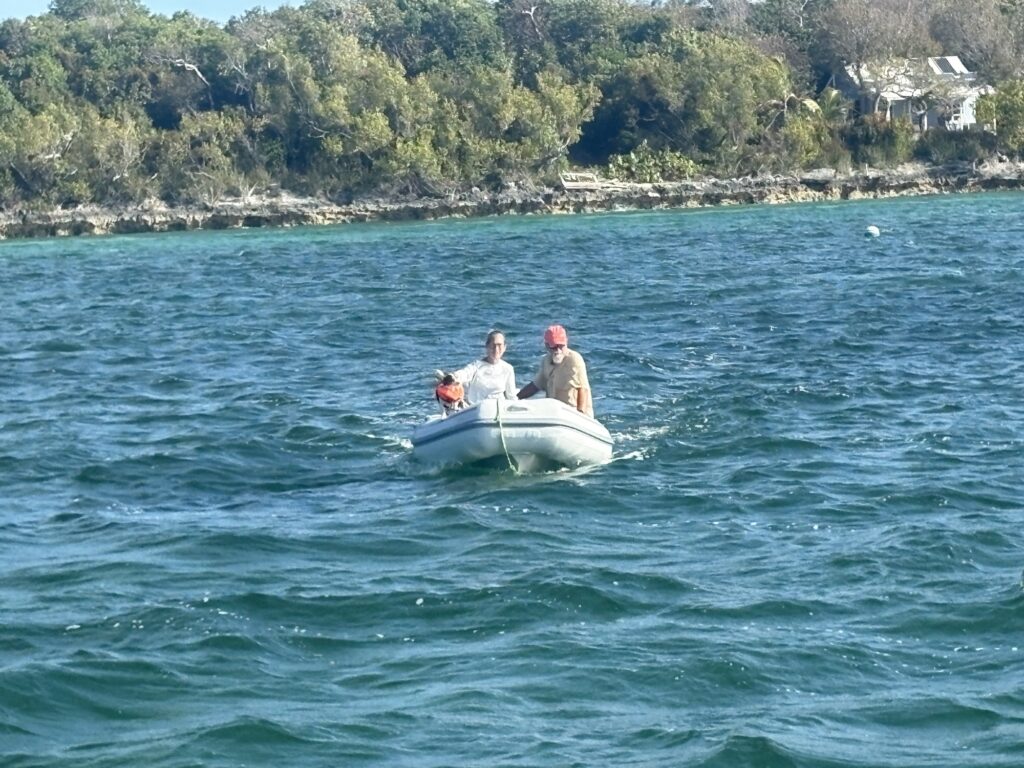
We had decided on a walk for the high wind day. David was a little uncomfortable leaving the boat but we had not budged for 48 hours so we trusted our anchor was well set. Launching Fat Tuesday was a little more difficult in the wind and waves but we managed.
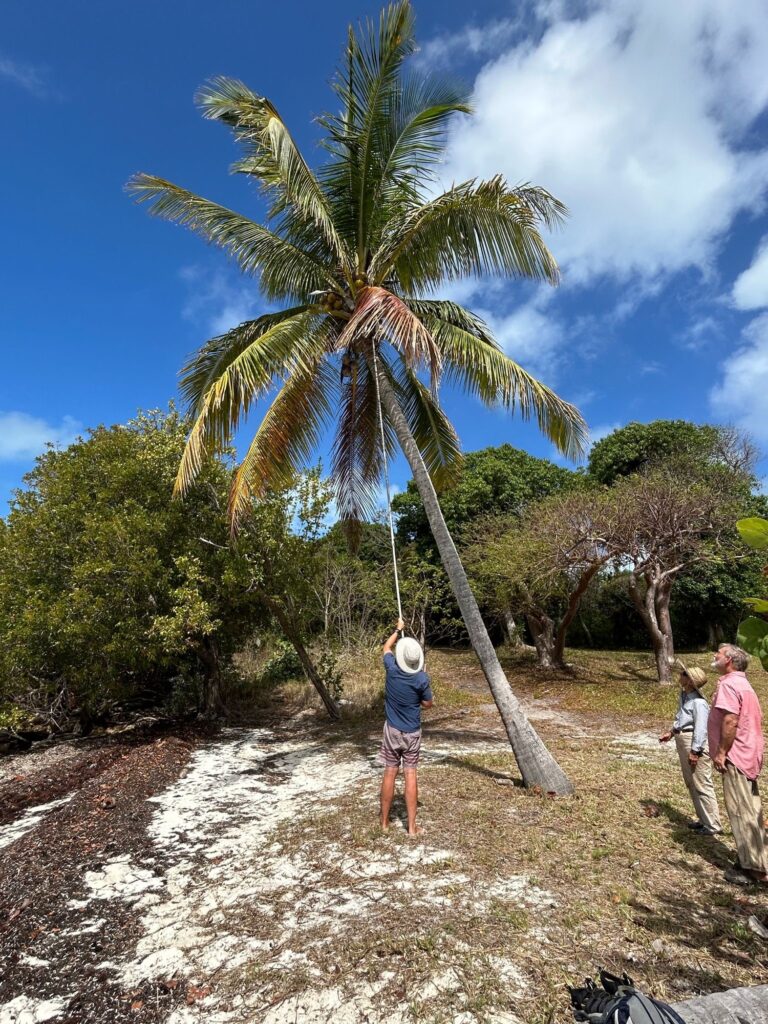
We headed to the beach around 11 am with plans to picnic at the ocean beach or Coconut Beach. There were a few cruisers on the anchorage beach already and when we arrived, a man was trying to knock coconuts from a palm with a long pole. The man, Bill and his wife Leslie, own one of the houses on the shore. They have lived on the island for 33 years and were the first residents.
Bill and Leslie lived in the lagoon for 9 years and built the home closest to the beach. Before they were married, Leslie lived on a trawler and they lived on the good ship for the first 9 years. They kept it deep in the lagoon, where the motor boat we saw is now located. Every two weeks, on the high tide of a new moon or a full moon, they would take it out and go reprovision.
They later sold their first house and now live in a house furthest out on the point. They still keep a motor boat in the lagoon and the sailboat out front and come to the beach daily. They do not believe in private beaches.
Bill was struggling with the coconut process and needed someone a little taller so Jeff took over. He was able to knock some ripe coconuts down. Bill then took them to a stump he has fashioned for the purpose of processing coconuts. Embedded in the stump is the tyne of a tractor cultivator which David recognized instantly. Bill uses the end to make a slash in the husk. He then pulls against it to remove the husk.
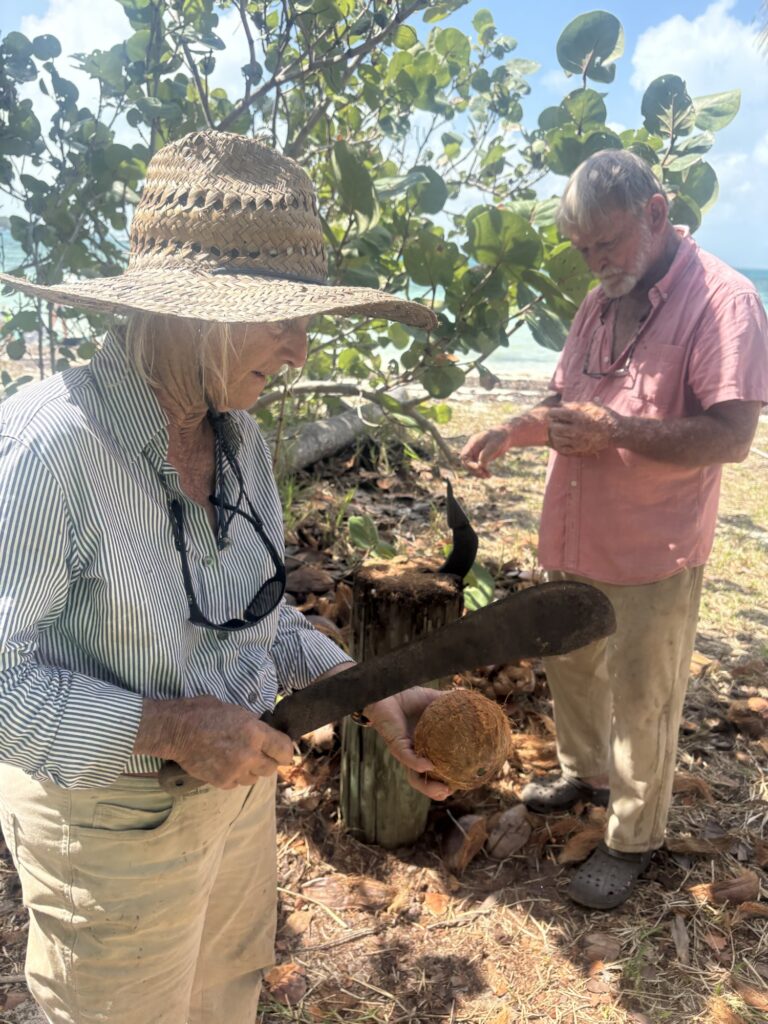
Once Bill removed the husk, Leslie pulled out a pocket knife. This won instant awe from all cruisers. She used the knife to make a small hole in the “mouth” of the coconut which was quite soft. We then shared the coconut water. It was delicious. Leslie then placed the coconut on the stump and hit it with the dull end of the knife along the “equator.” The coconut broke in half and we pryed off some of the meat to eat.
Bill and Leslie had planted the coconut tree as well as a few others along the beach. Now the coconuts are planting themselves. The trees take 6-7 years to flower and make a fruit and about 11 years to make bunches of coconuts. The trees take can live for over 80 years. The meat of the yellow less ripe coconuts is more like jelly and not as sweet but still edible.
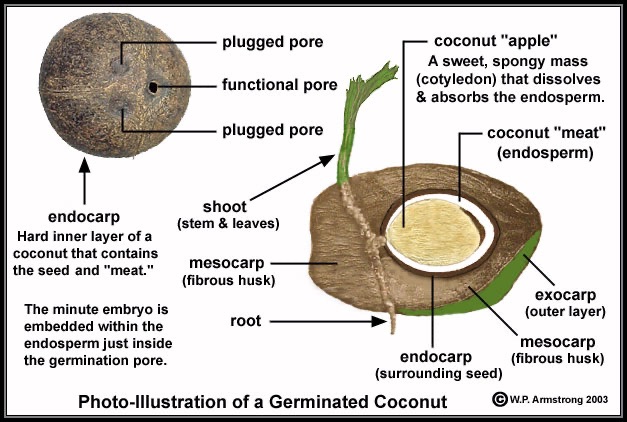
I had to look up where the seed of the coconut is. The embryo is located right under the mouth of the coconut, also called the functional pore, the soft area where Leslie cut into the fruit. It forms a cotyledon, “the coconut apple” on the inside and sends a sprout and a root from the mouth.
We walked the trail to the ocean beach as Deb and Jeff had not been there before. We met another home owner with a dog named Echo. He said the restaurant building was on hold due to permit issues. The residents have a sort of camp with a flag and several chairs in the shade in front of the building site.
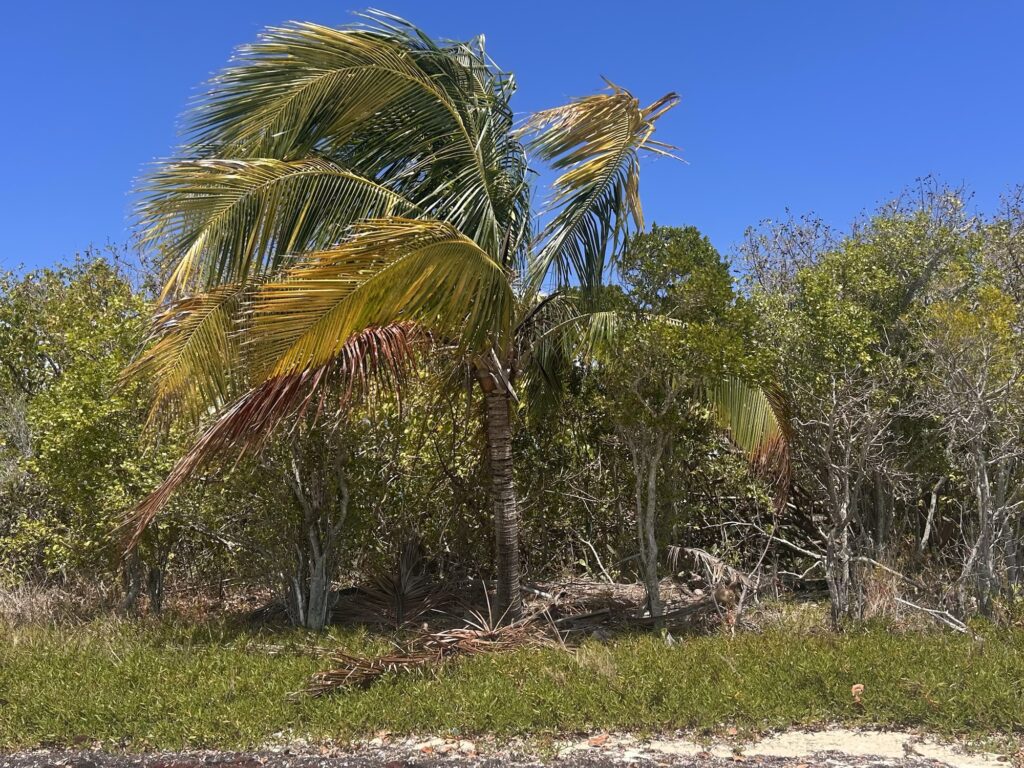
We walked down the beach to find our own shade and ate our lunch. David and I went swimming. The beach is so lovely. We then walked back and decided to go to coconut beach. It was a smaller beach a short distance from the fork in the trail. It is right around the point from our anchorage. There was a trail from there to the next cove and beach and Deb explored it a bit but we decided not to go all the way down it. Coconut beach was picturesque and quiet with its one coconut palm, planted by Bill and Leslie.
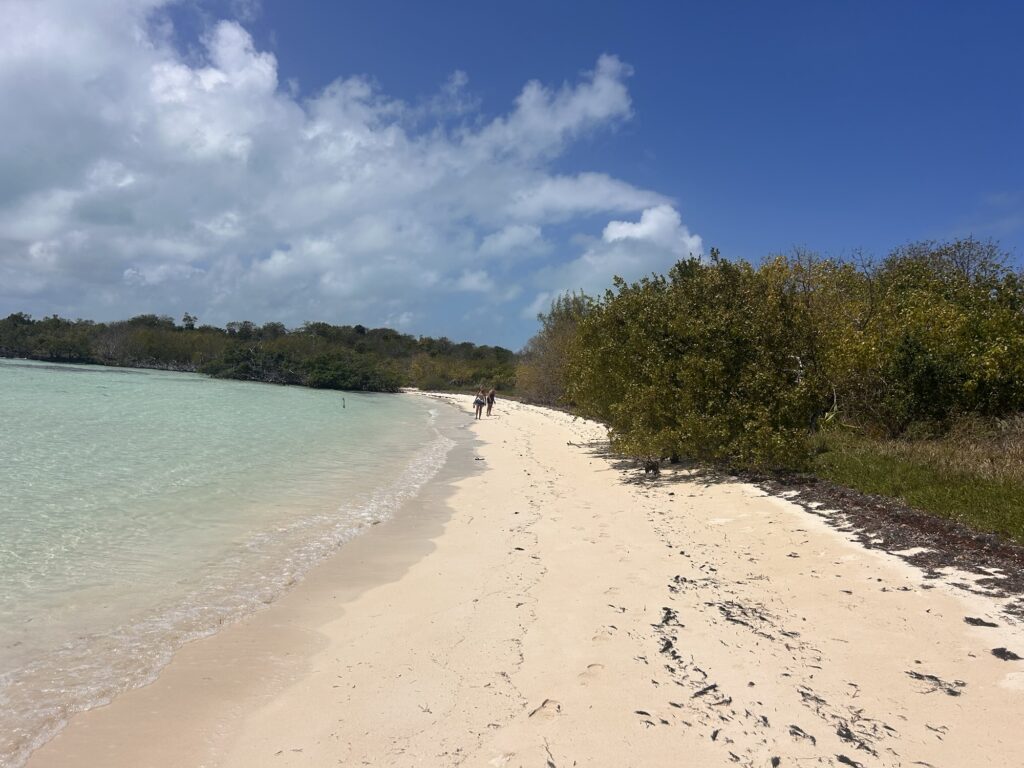
We walked back to the anchorage beach where cruisers were set up for the day with floats and shade shelters. Everyone was very nice. The turtles were there, including Dawson in his spot at the edge of the grass. I swam with him one last time. Bill said the turtles are too many now that they are protected and that they have interfered with the bonefish population. I am just glad that we can see them.
Jeff and Deb came to the boat to have a final drink with us. They brought Sands Pink Radlers for the occasion (a local grapefruit beverage that is refreshing and low alcohol). We thanked them again for all of their help and kindness. We tried to plan a future visit, maybe as they make their way north and pass through Virginia.
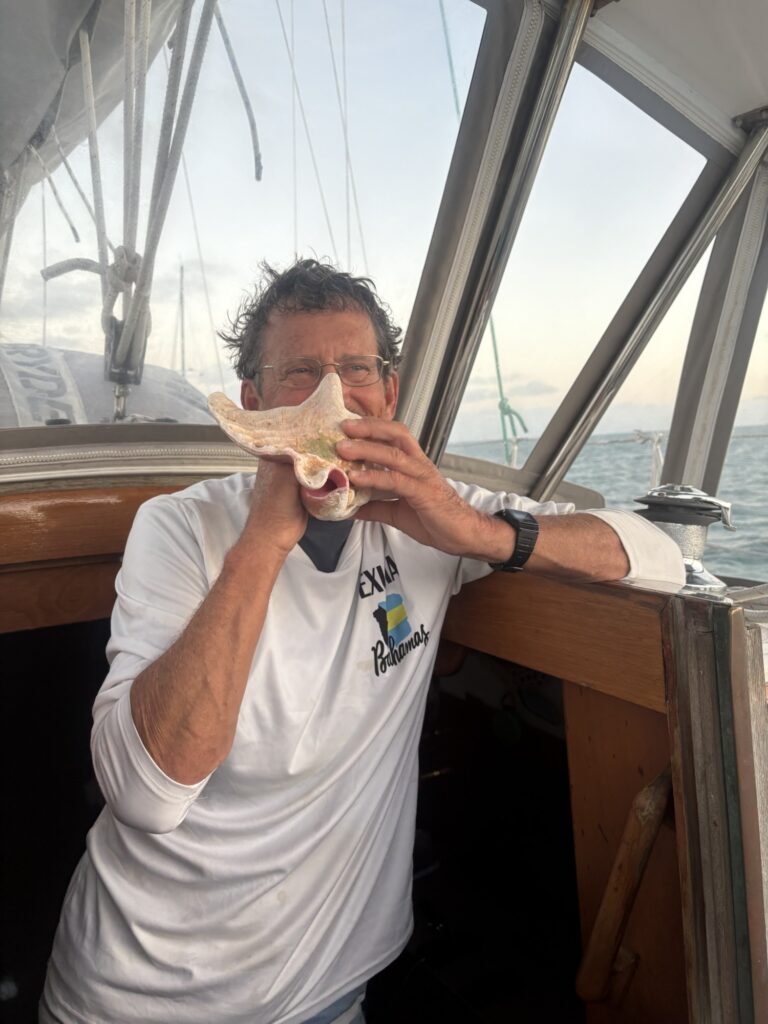
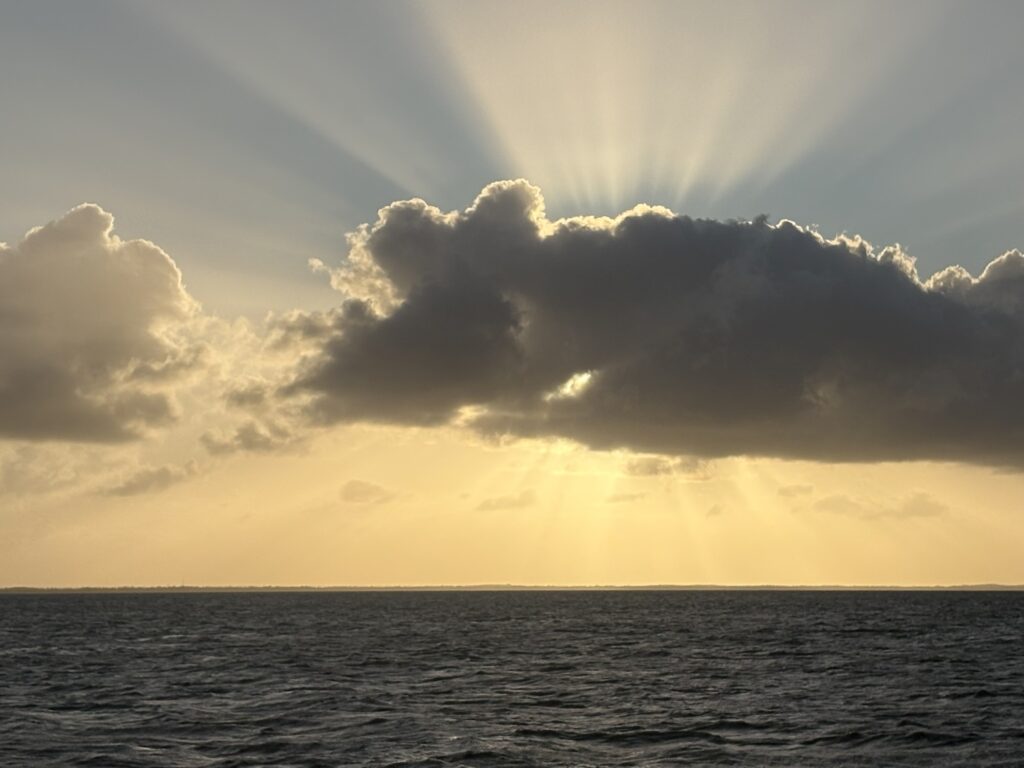
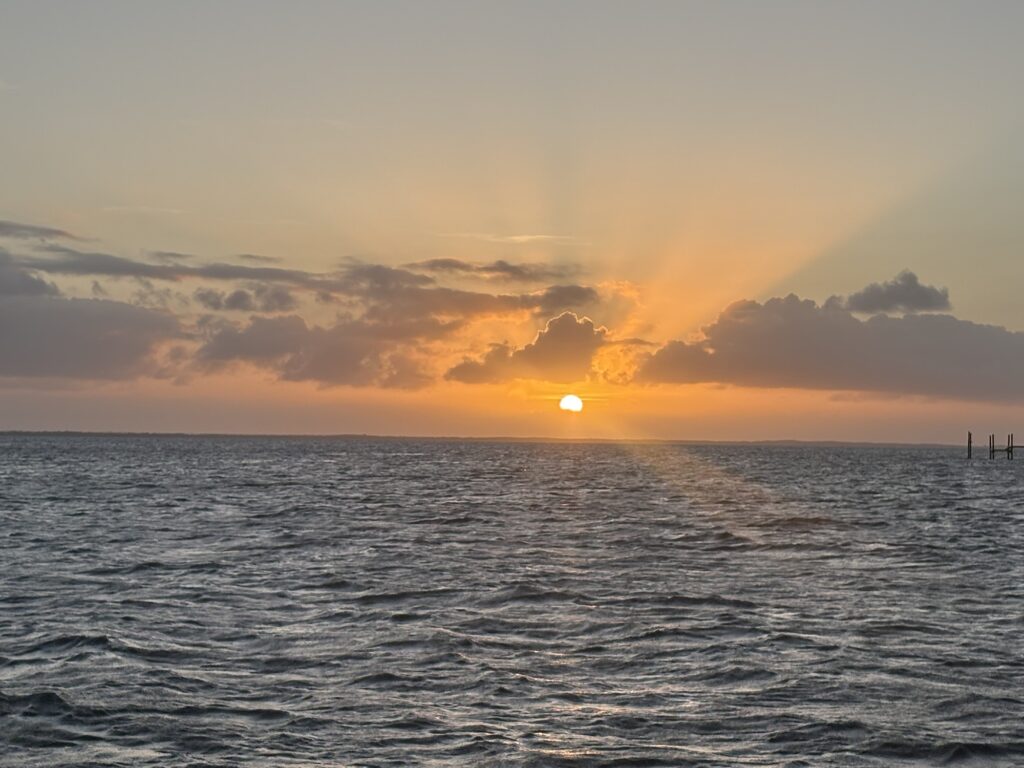
They headed back before sunset and we got the boat straight for a morning departure. We watched the sunset and blew the horn with several others in the harbor. Once it got dark, we worked on learning to adjust our chartplotter for night sailing so it would not be so bright. We were successful in dimming the screen which will be very helpful. Winds were picking up again as we headed to sleep.