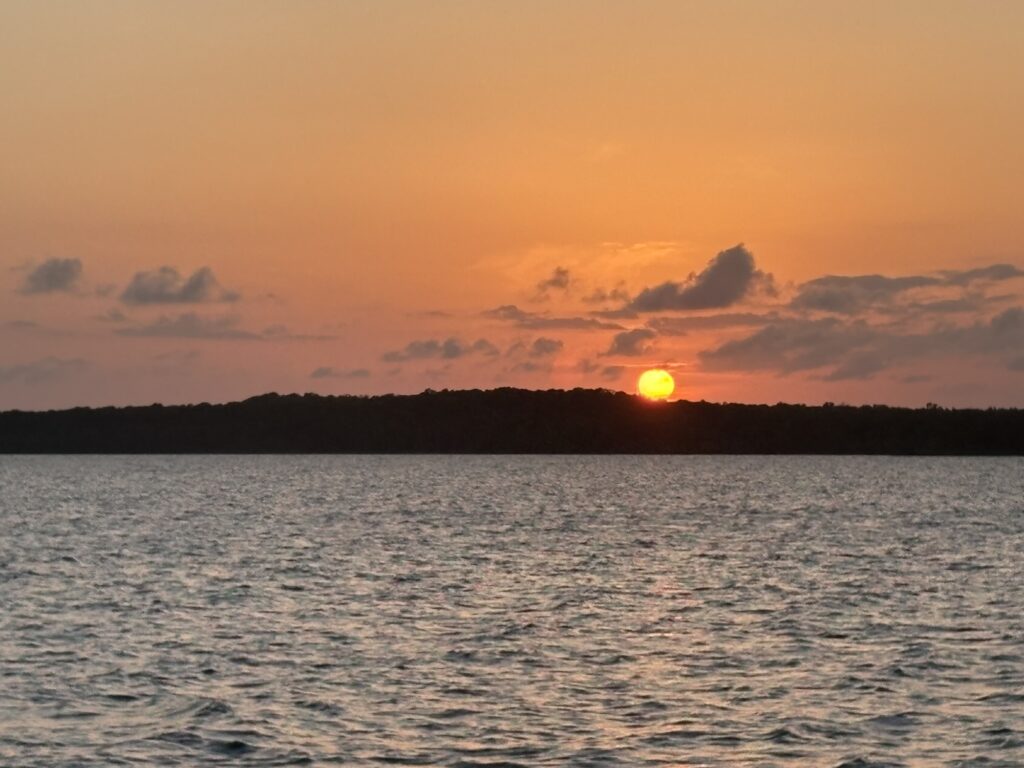
We were up early getting ready for our trek across to the Abacos. We were to have wind from the southwest and then south. We were headed north and a bit east. We were hoping to sail and started out doing well on a broad reach. We were in light winds, doing about 5 knots.
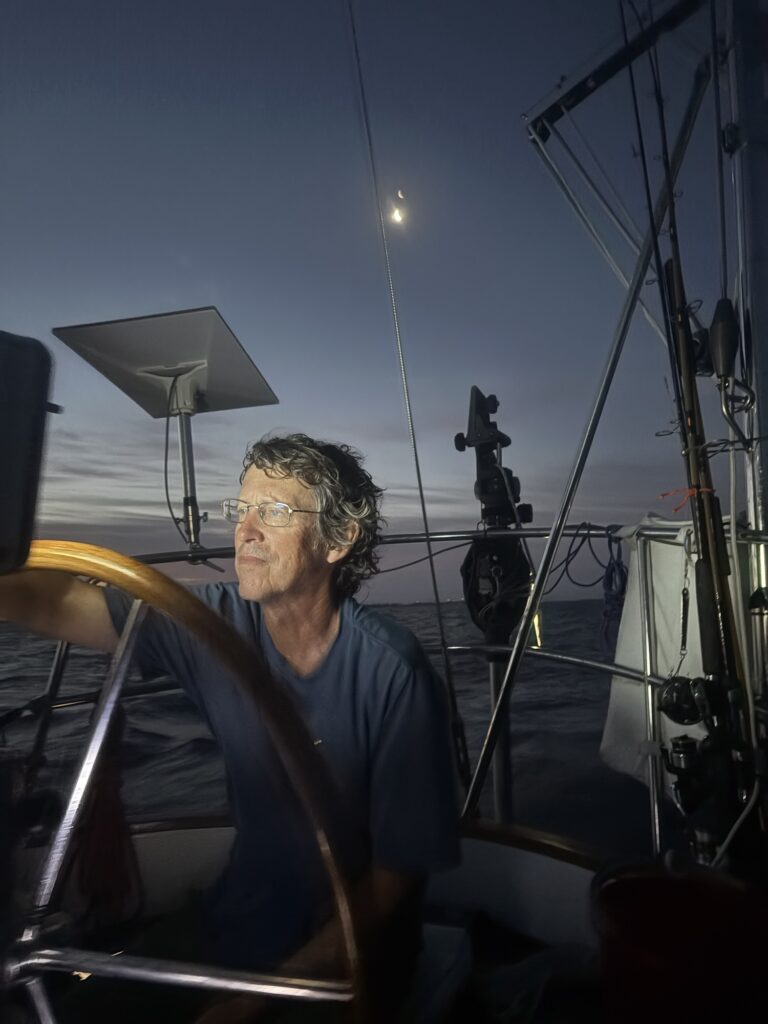
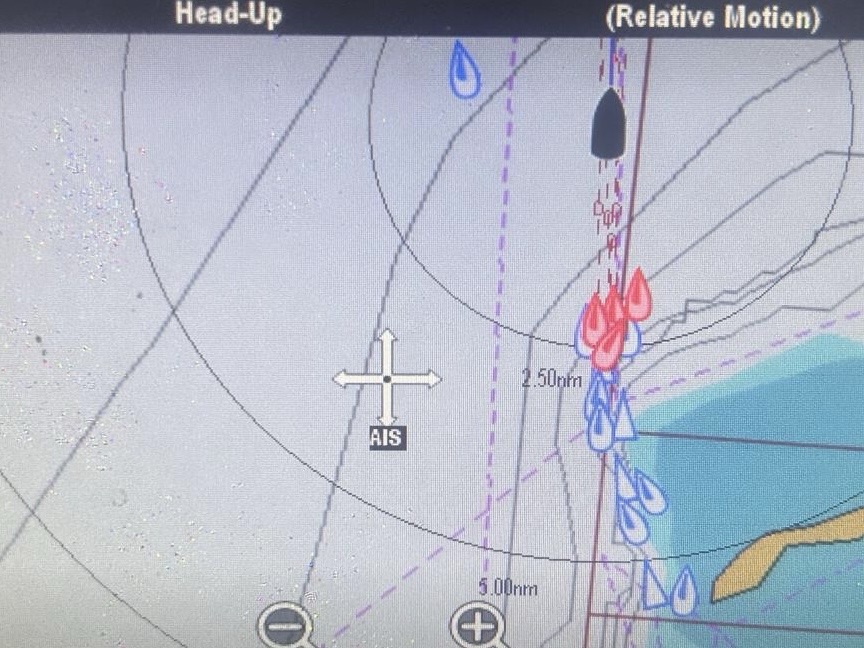
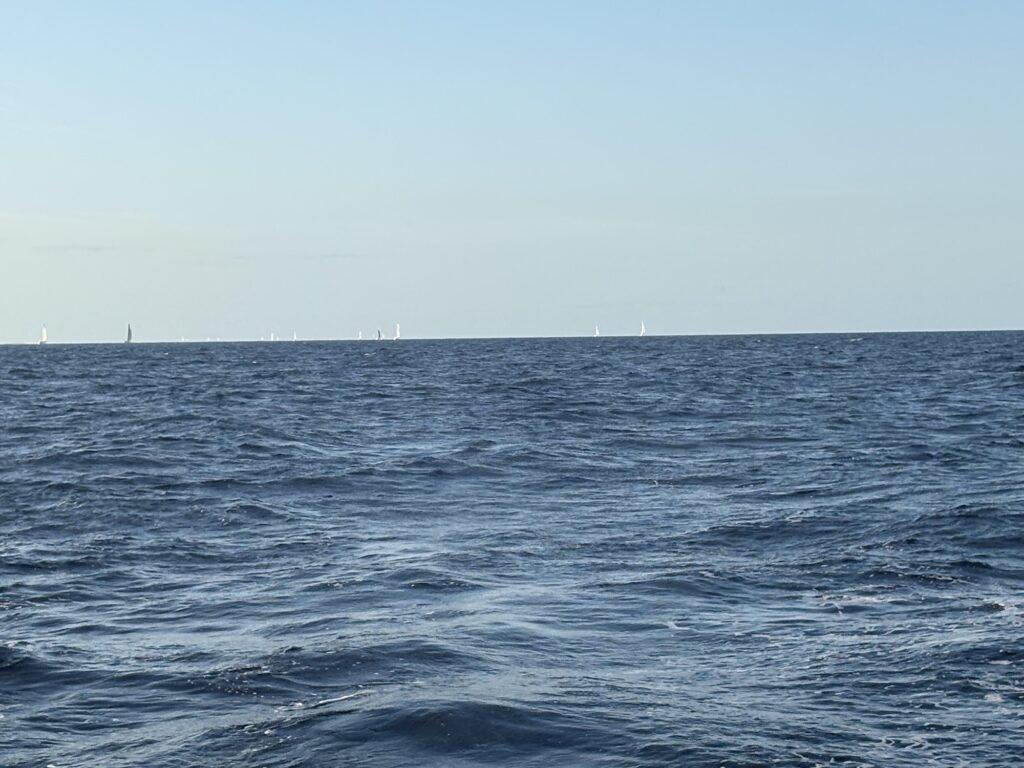
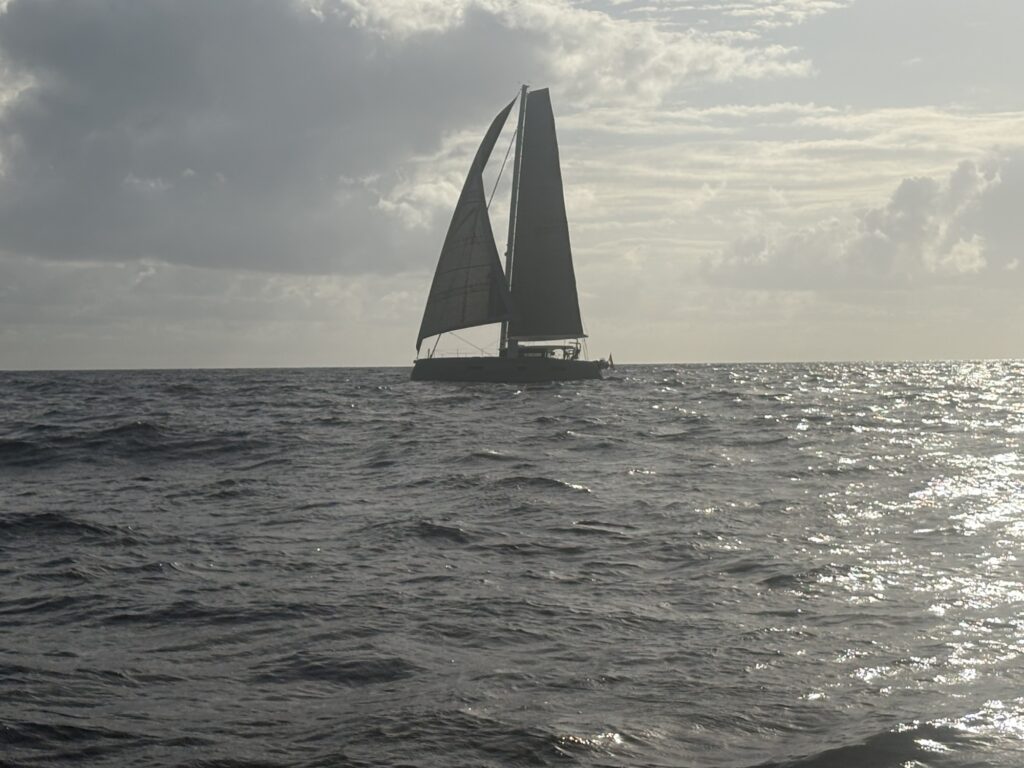
There was a literal parade of boats headed on the same course. The chart plotter showed them best. Most of them passed us.
Then the wind turned a little bit south and we were sailing almost downwind. The winds were light but the swells were still from the southeast and up to six feet. We were back to big waves on the quarter which we have had many times but is uncomfortable. When the waves hit just right, the boat rolls from side to side. And when we are downwind, the sails flap from side to side with waves pushing us. There is a lot of banging and clanging.
We wanted to have sails for stability but they were crashing around so much, we ended up just taking them down. There are several other things that would have helped us. One was a boom preventer which is a line from the end of the boom to a snap shackle at the bow and then back to the cockpit. This keeps the boom out and prevents it from swinging around. We need to rig this. The other thing that would have helped us was a whisker pole which could help keep our Genoa from flapping around. We do not have one but it is on the list. We have the attachment to the boom for this.
We could have flown our spinnaker but we were nervous to do so, given we have only flown it once and the sea state was such that if we had trouble getting it in, it would have created problems. We plan to fly it in light conditions and really get comfortable with it. We could have tacked a bit so we were not directly downwind. Then we could have sailed at a better angle. This may have taken longer than just going a straight course but racers have calculations you can do to figure this out and not rolling so much may have saved us time. At any rate, we have room for improvements and plan to learn some things as soon as possible so that next time it may be better. We had to enter the Abacos via Little Harbor cut. It was a cut between two reefs. One of them was under water but you could see waves breaking over the reef. We were with the current and the swells were still affecting us but David got us through and to the calmer waters within.
We headed up to Lynard’s Cay and the challenge there is to drop the anchor in a sandy patch amid the grass. Luckily, we still had light to see the sand. We found a sandy patch and anchored. I dove over the anchor. Our chain was buried in the sand but our anchor was just lying on top of the sand. David reversed the engine and the anchor dug in. Sometimes just the weight of all our chain holds us in light winds. Our anchor was in the middle of a nice sandy patch.
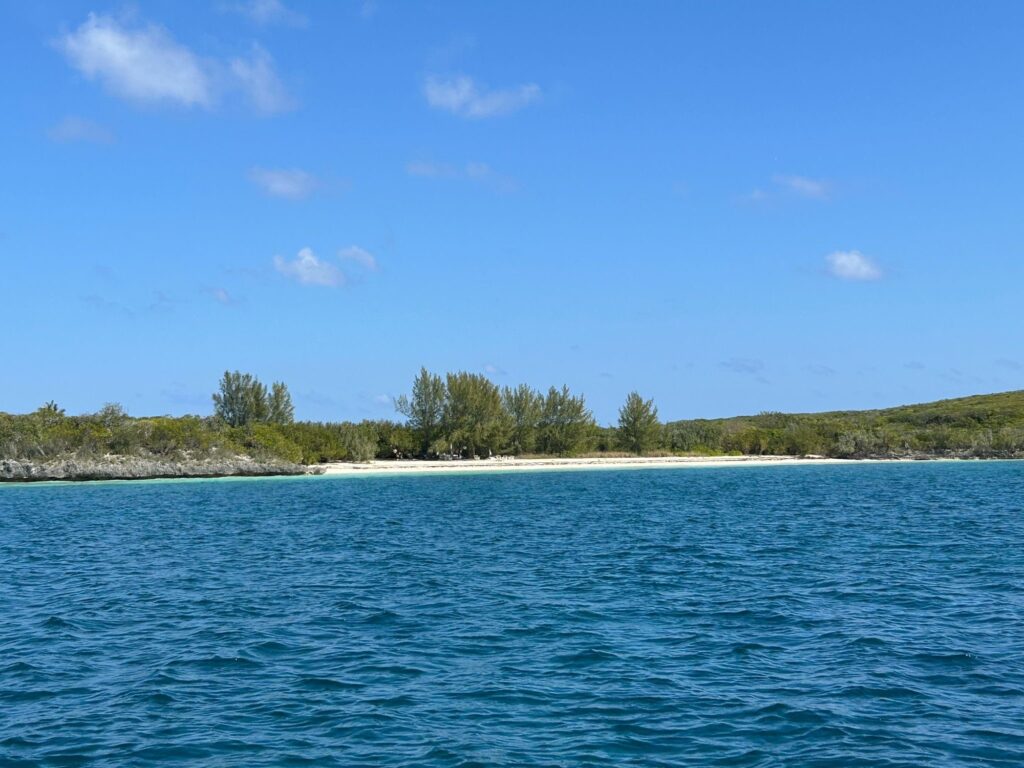
We launched Fat Tuesday and headed to the beach. We saw the captain of Allegra in her kayak. They had a rough passage as well with her partner seasick. We met a really nice couple from Australia. They had been cruising for 7 years on a motor yacht. He is a former sailor. They had also passed us and felt bad for us rolling around out there.
We walked a trail to the other side of the island. It was rocky but beautiful. When we came back, We saw the crew of Leiline, a 30 foot sailboat with a hard rowing dinghy. David had met them in Georgetown. It is a couple and their 12 year old daughter, Aria, from Ontario. Aria does not like passages but loves the places they have been. She had a great time with other kids on boats along the way. She had some play dates on catarmarans and has been won over.
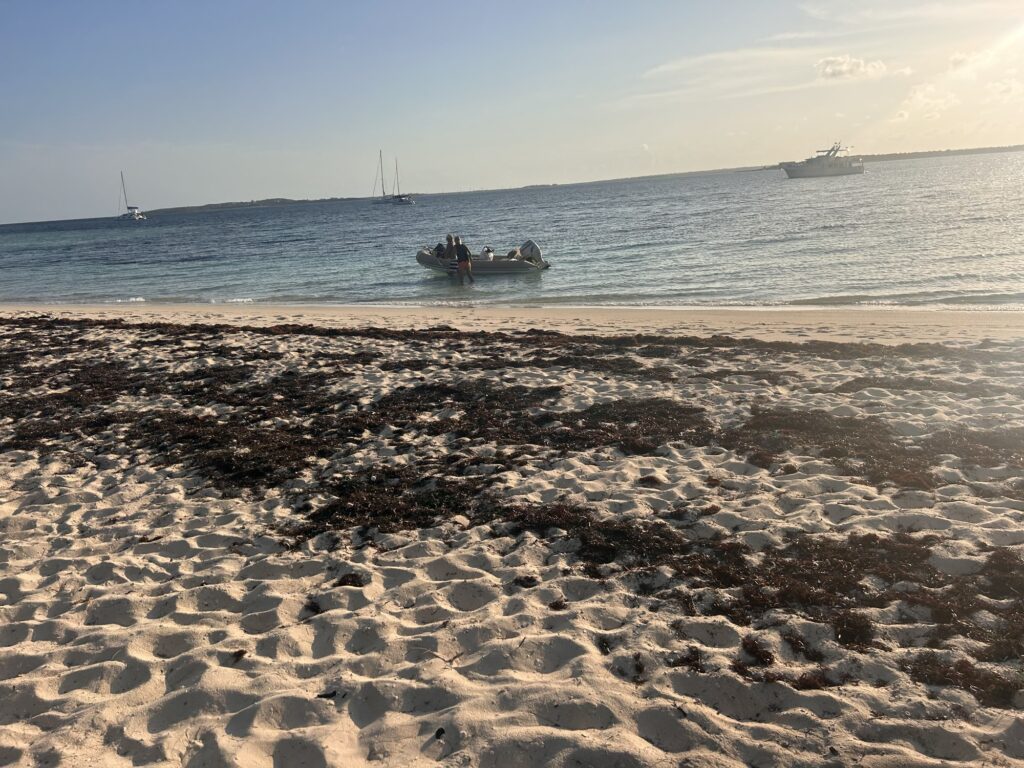
We headed back for dinner and sunset. We were tired and a little frustrated from the sail. Expecting a calm night.