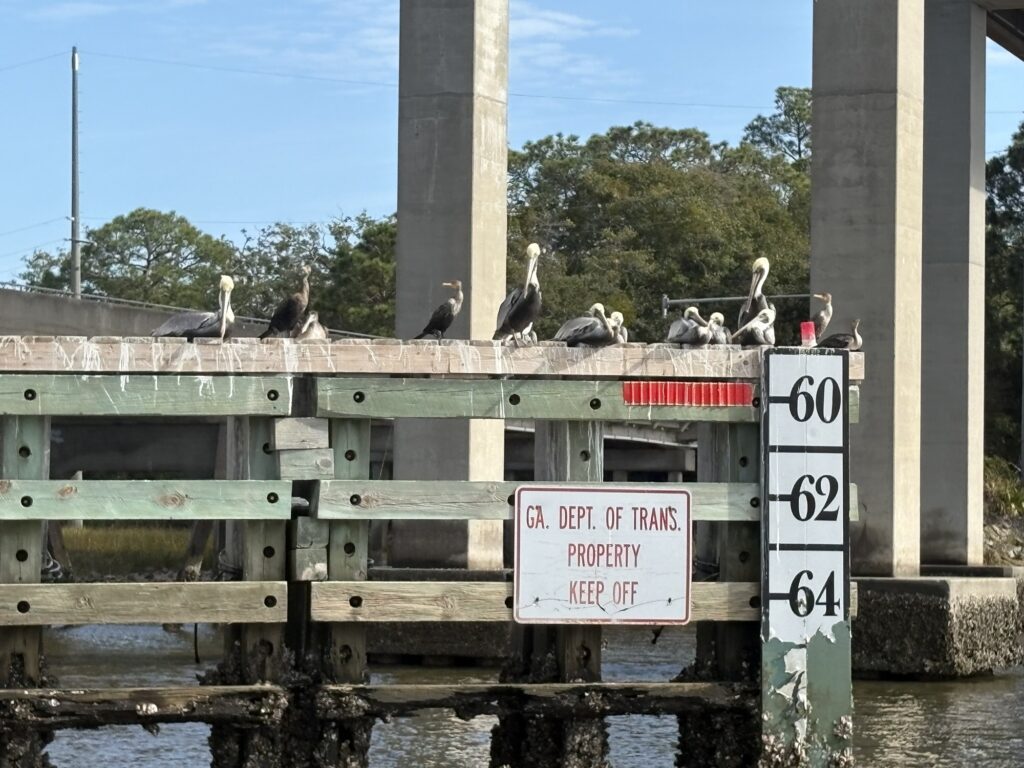
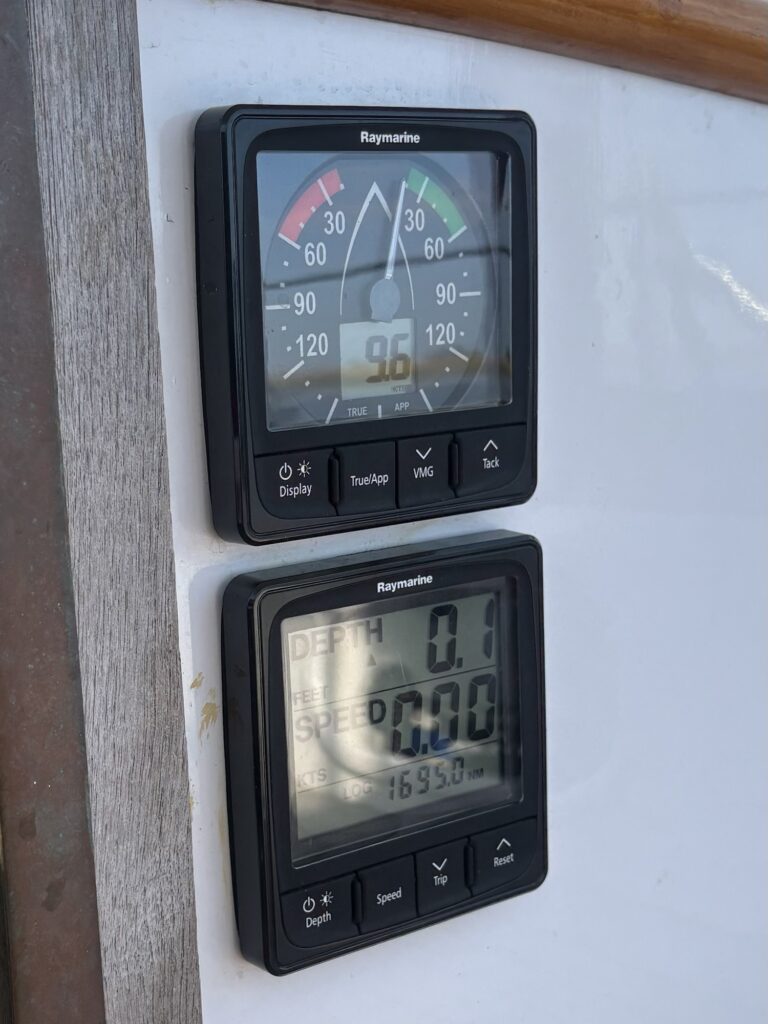
Decided on the Intracoastal Waterway to Fernandina Beach, FL. South winds were expected which would have meant motoring in the ocean and potentially waves against us. We headed into Jekyll Creek which runs behind Jekyll Island. It is a narrow cut. It was just past low tide. It was a stressful passage with our depth finder dropping to almost zero for prolonged periods. We stayed on track and motored slowly but had to motor faster when wind picked up. We were very happy to reach St. Andrews Sound where the water got a little deeper.
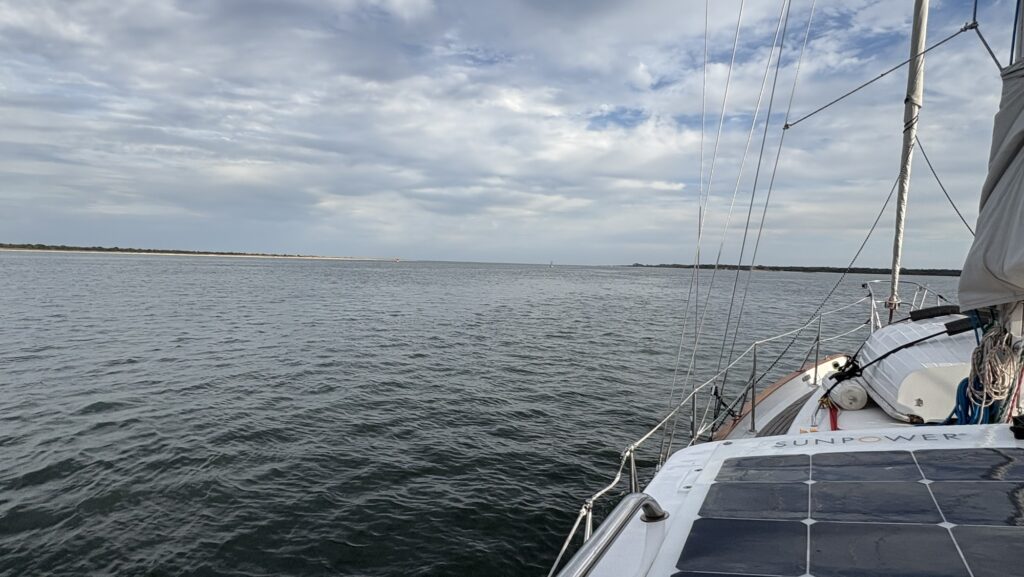
We then entered the Cumberland River behind Cumberland Island. This is a protected Island, accessible only by boat. There is an inn there, some ruins of a former Carnegie compound, wild horses released from the Spanish, armadillos and alligators. There is a ferry from St. Marys, Ga and also maybe one from Fernandina. The december ferry schedule is limited so we may have to put this on the way back list.
We decided on a marina in Fernandina because we will only have a day there and weather is supposed to be bad tomorrow. A marina will allow us to go to town tomorrow even if weather is too bad to dinghy ashore.
We approached the St. Marys river and the inlet that divides Georgia and Florida. St. Marys , Georgia is on one side of the river and Fernandina Beach , Florida, a town on Amelia Island is on the other. The Northern tip of Amelia Island is a park and an old fort. After that, the waterfront is very industrial with factories. There is a paper mill smell in the air. If you search industry in Fernandina Beach, one site only mentions shrimping.
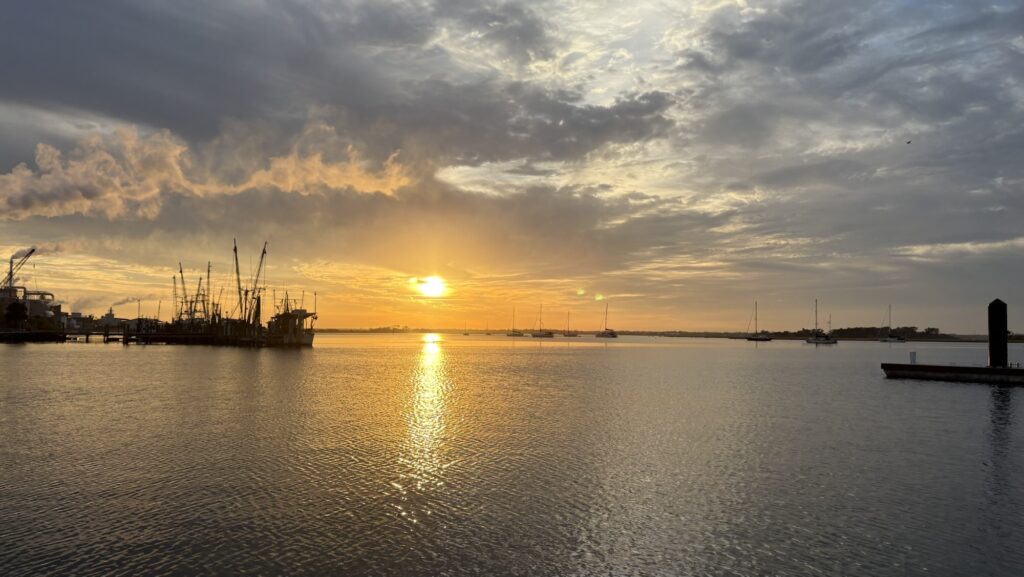
We passed the company West Rock on our way to the marina. It is a massive structure. They make packaging, cardboard. Their website boasts of more sustainable packaging and alternatives to plastic. They are based in Dublin. The second factory beyond the marina is RYAM which makes cellulose, bioethanol and fluff pulp. They claim to be very clean. One review says only water (steam) comes from their smokestacks. Their website is about sustainability, a circular economy, They are hydropowered and lowering their carbon emissions. Fluff pulp is what is inside diapers.
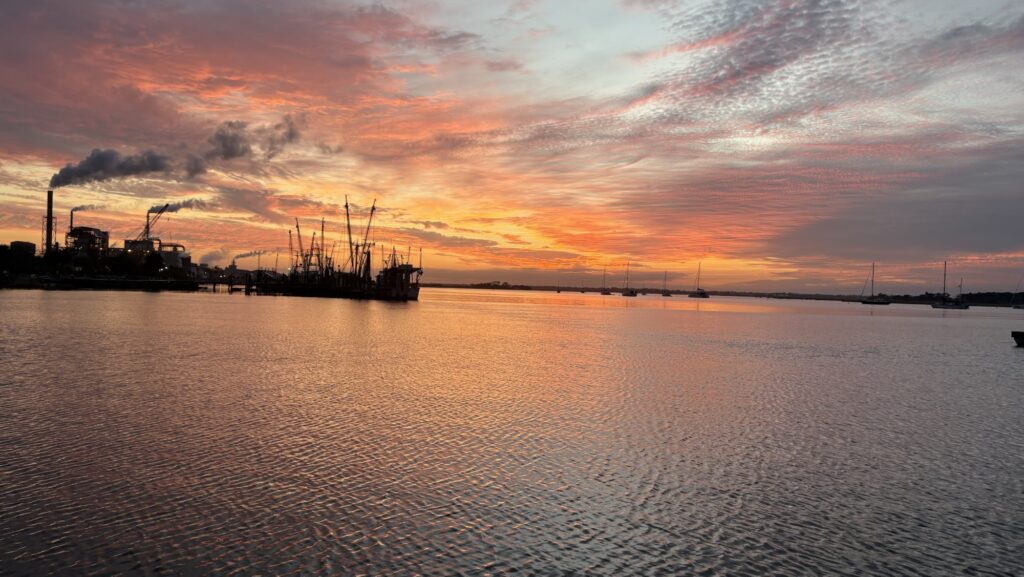
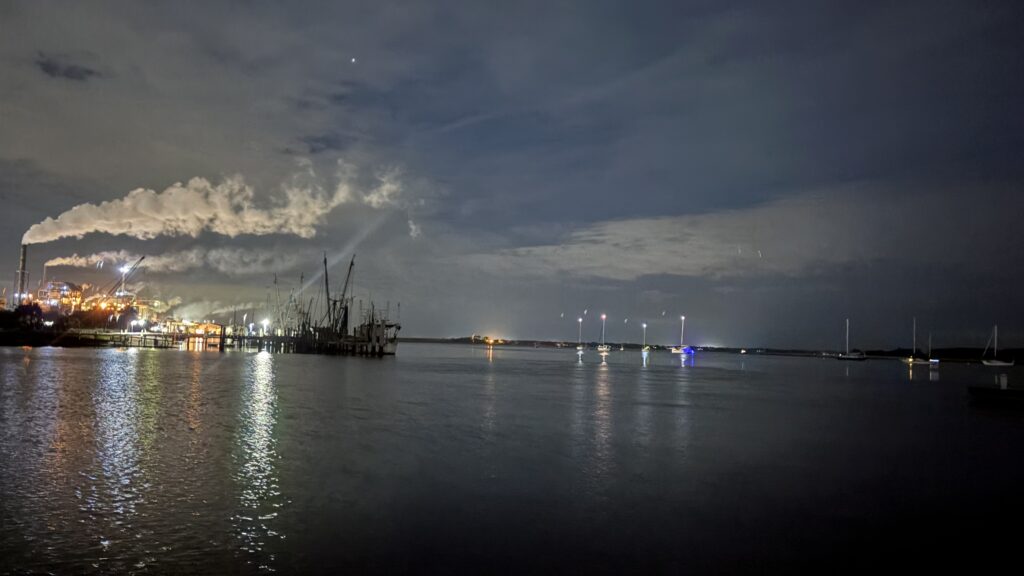
The harbor behind the factories is beautiful and it would have been easy to photograph leaving the factories out but I needed this reminder of what it takes for the things we all use and depend on.
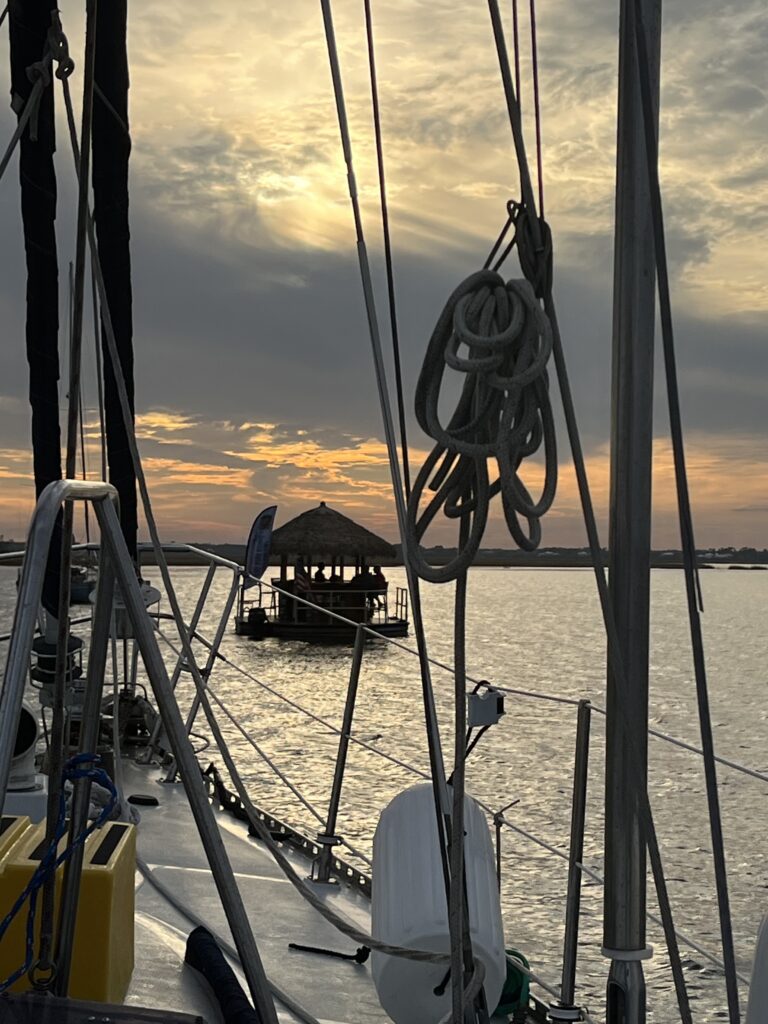
As we pulled up to our dock, a tiki bar was heading out. David teased me with the radio. “Tiki bar, Tiki Bar, Tiki bar, This is Josie, can you come get my wife?” I relayed this story to Fishes who are anchored in the harbor. They said they were calling to it too and sent this picture.
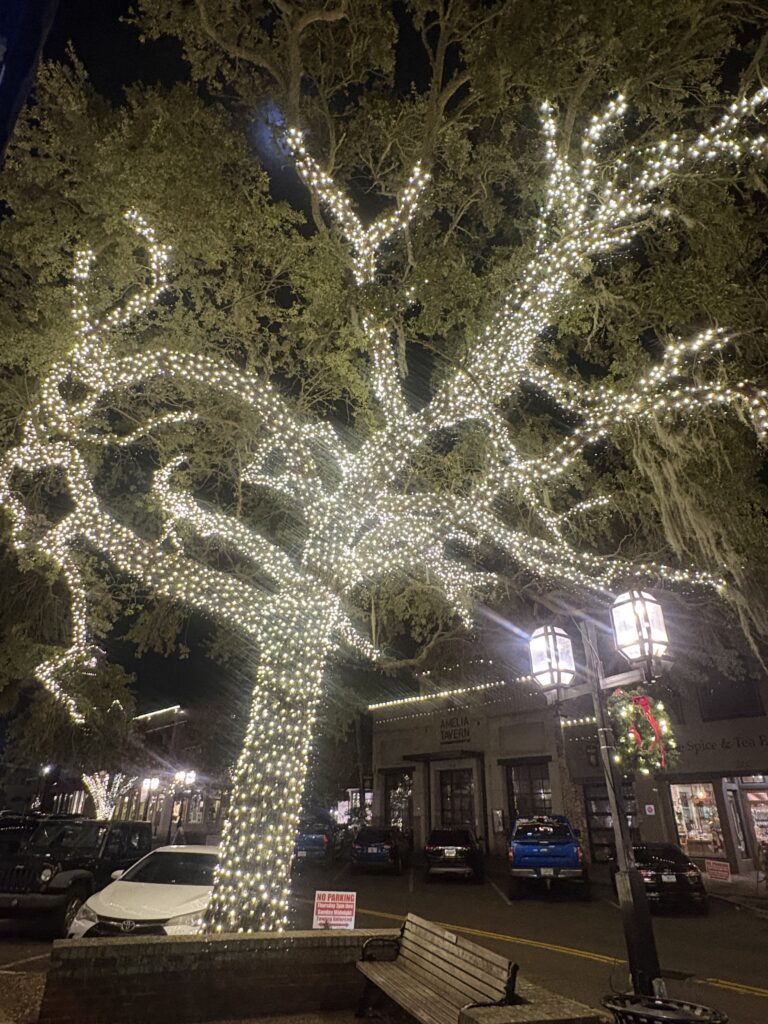
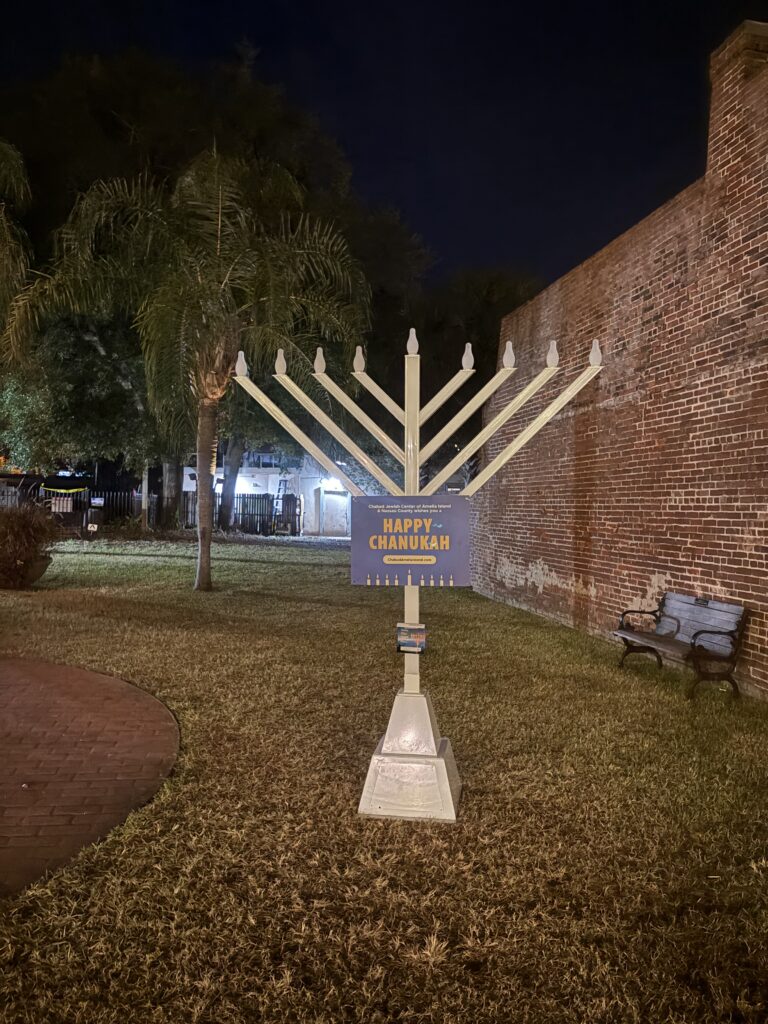
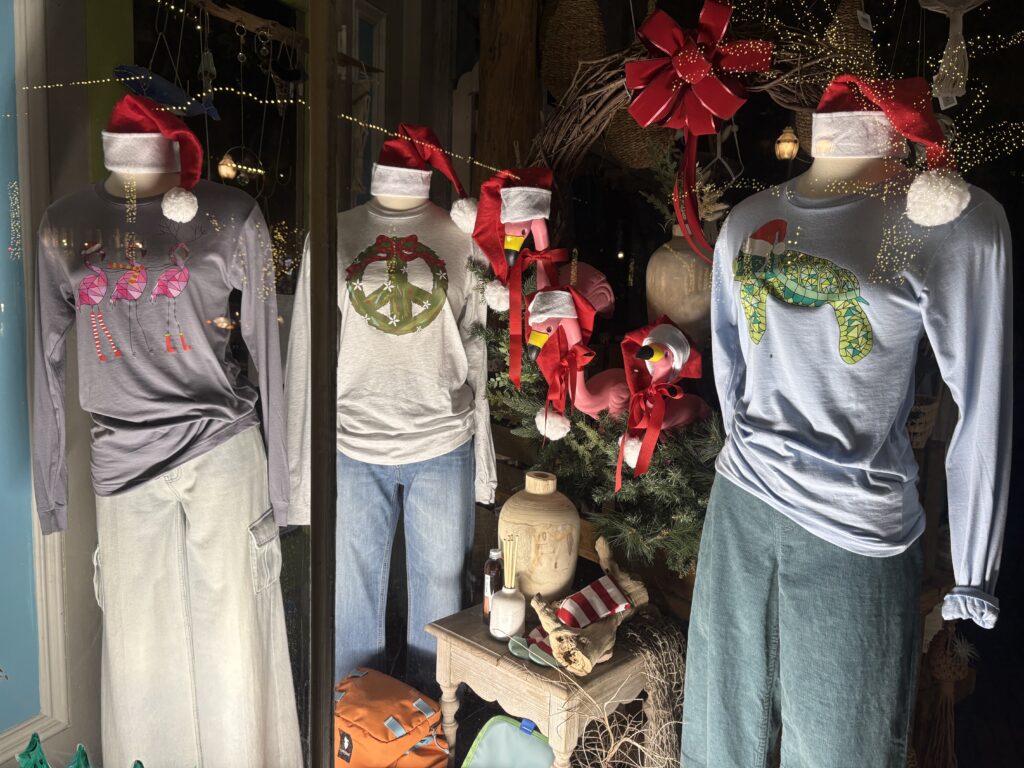
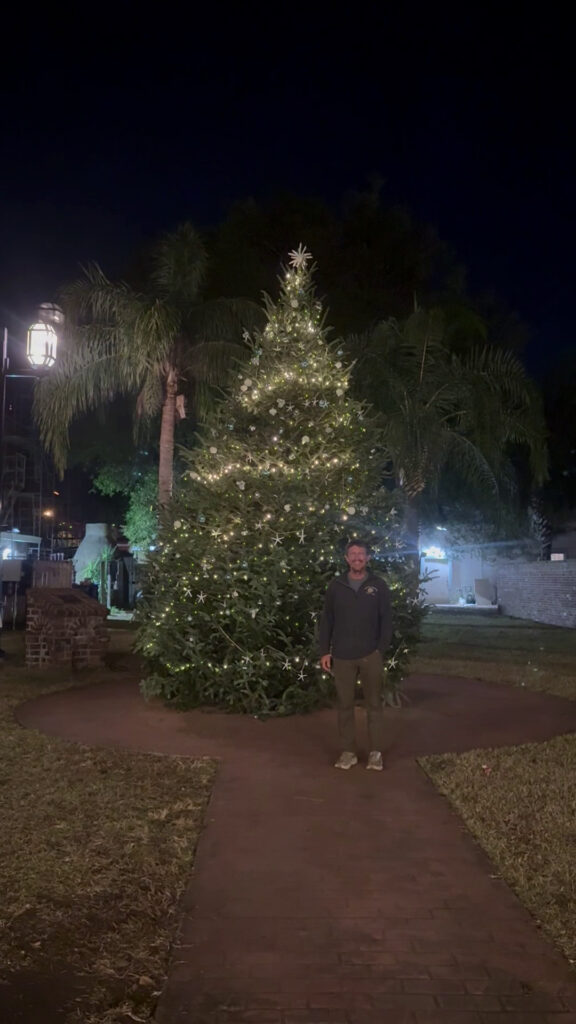
We went for a walk through the town. There are railroad tracks next to the waterfront. The lights were beautiful. Dinner on the boat.